
A crochet tote bag is easy to start and surprisingly easy to make impractical. A tote that is too open can lose small items, a narrow handle can become uncomfortable, and a soft base can sag as soon as a bottle or book is added. Good planning turns the same basic shape into a bag that is comfortable to carry and more likely to stay in use.
The credited crochet daniela video provides the step-by-step construction. This guide adds the decisions a viewer should make before and during the project: useful dimensions, fabric density, handle placement, reinforcement, lining and a realistic load test.
Think about the tote as a container first and a color project second. The intended contents should guide the yarn, size and finishing choices.
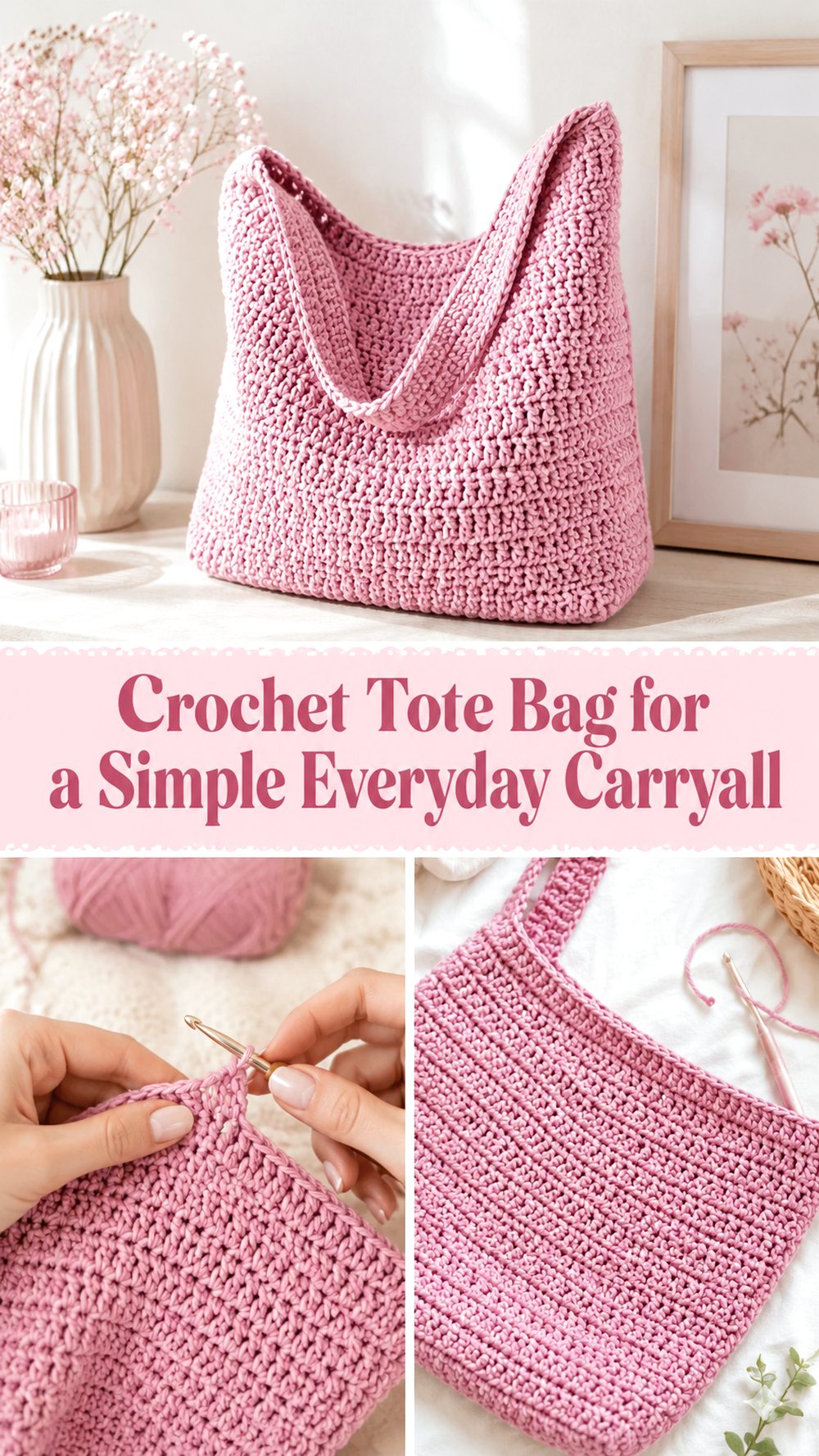
Define the Tote’s Job
A market tote, project bag, everyday handbag and book tote need different fabric. List the three heaviest or largest things the bag is expected to hold. Measure the tallest item and the combined width of the group. Add comfortable clearance so the opening does not need to stretch every time something is inserted.
A very large tote invites overloading. If the yarn is soft or the handles are narrow, keeping the body moderate can produce a more durable result than simply adding rows.
Plan Finished Measurements
Measure an existing tote that feels comfortable. Record the flat width, body height, base depth, handle length and distance between handle attachments. These numbers are more reliable than choosing size from a photograph.
Remember that crochet dimensions can change after use. Make and wash a swatch, then hang it with a small weight. Use the settled measurement when estimating rows and stitches, especially for the handles.
Choose a Fabric With the Right Density
For a general-purpose tote, the fabric should bend but not open widely when a finger presses from inside. Cotton, cotton blends and firm synthetic yarns are common choices because they can create clear, durable stitches. Fiber content alone does not guarantee strength; twist, gauge and stitch pattern all matter.
If the tutorial fabric is more open than your intended use allows, add a lining rather than forcing an extremely tight tension that makes crocheting uncomfortable. A lined tote can keep the handmade surface while protecting the contents.
Keep the Base and Side Edges Square
If the tote is made from panels, count rows and stitches on both pieces and block them to matching measurements before seaming. If worked in rounds, mark side positions and check that they stay directly opposite each other.
A rectangular base should lie flat without a raised ridge at one corner. Check the stitch count after each increase section. Small base errors often become visible as twisted side seams higher up.e repeated stitches and straightforward bag construction.
Position Handles for Balance
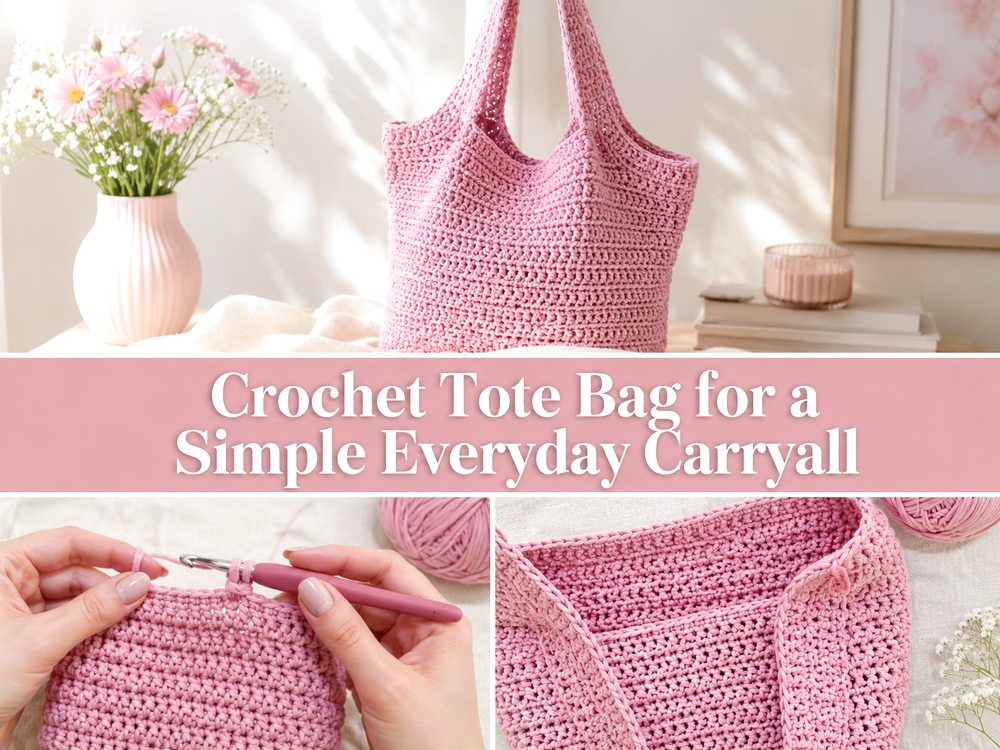
Handle spacing affects how the opening behaves. Handles placed too close together make the center gape and the sides fold sharply. Handles placed too far apart can pull the upper corners inward. Mark equal distances from both side seams and compare the front and back before attaching.
Test the handle drop over a coat or the thickest clothing likely to be worn. A comfortable hand-carry handle may be too short for the shoulder. Temporary clips or safety pins make this check easy.
Reduce Handle Stretch
Crocheted handles often lengthen because rows or chains are pulled continuously in one direction. Use a dense stitch, work the strap wider, or crochet lengthwise if that creates a more stable structure in the chosen pattern. A row of slip stitches along each edge can add firmness, but test it because it may also cause curling.
For a frequently used tote, sew cotton webbing or twill tape to the inside of the handles. Continue the reinforcement a short distance down the bag body so the load is spread across more stitches.
Add Lining, Pocket and Closure Deliberately
A lining controls stretch and prevents pens, hooks or keys from catching the yarn. Use the completed tote as the template, and include enough ease for the lining to reach the corners without pulling. Add the pocket before sewing the lining into the bag.
A magnetic snap, button loop or zipper can make an everyday tote more secure. Reinforce closures with a small fabric patch on the lining. Do not attach a strong magnetic snap to unsupported crochet fabric because repeated pulling can distort the top edge.
Run a Practical Load Test
Fill the finished tote with the normal contents and carry it around the house for ten minutes. Watch the handle attachment, bottom corners and top edge. If the body drops much lower than expected, shorten or reinforce the handles before final trimming.
Clean the bag according to the yarn label. Empty every pocket, close hardware, support the bag when wet and dry it flat in its intended shape.
Common Problems to Avoid
- Making the tote very large without strengthening the handles and base.
- Attaching front and back handles at slightly different positions.
- Using a loose fabric for keys, pens or small items without adding a lining.
- Trimming handle tails before the loaded bag has been tested.
- Hanging the wet tote by its handles to dry.
Time Needed
This may take a few hours depending on your speed, yarn, size, and stitch pattern.
Conclusion
A crochet tote bag is a lovely project when you want something simple, useful, and easy to personalize. It is the kind of make that quickly becomes part of your everyday routine once it is finished.
FAQs
Is this a good beginner project?
Yes, this tutorial is framed as a basic step-by-step tote bag project.
Can I make it larger?
Yes, just repeat the body section until it reaches the size you want.
What yarn is best for a tote bag?
Cotton or a cotton blend is usually a very good option for everyday use.
Do I need to line the bag?
Not always, but a lining can help if you want more structure or plan to carry smaller items.
Can I change the strap length?
Yes, you can adjust the handles until the fit feels right for you.