
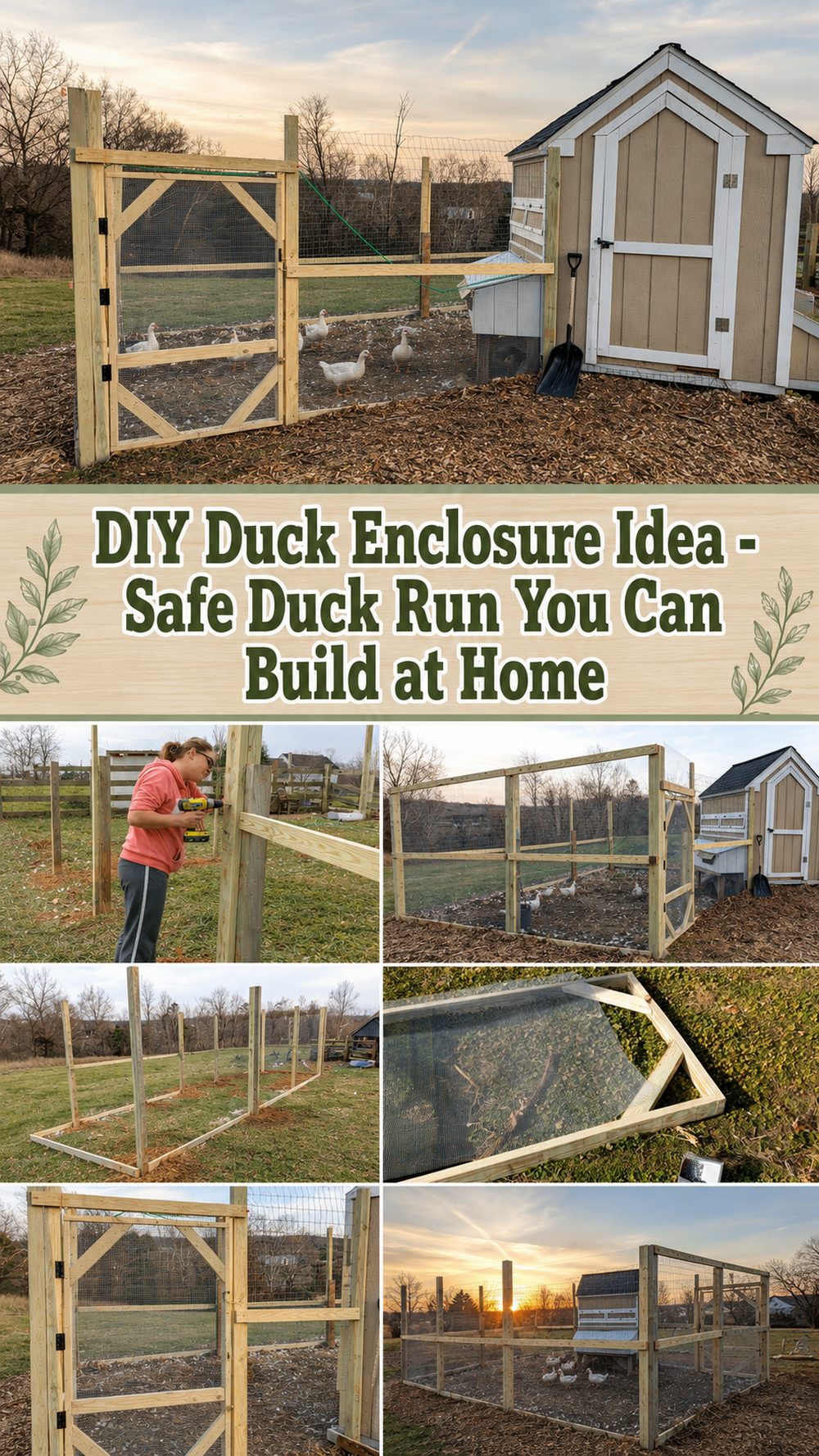
If you’re looking for a practical way to give your ducks more room while keeping them safer and easier to manage, a simple duck run is a great project to try.
This type of enclosure is perfect for backyard flocks as it allows a defined area for fresh air, movement, feeding and daily care without being overly complicated to build. For my tutorial I chose a simple framed run made with basic lumber and wire with a layout that appears easy to modify for different yard sizes.
This is a nice idea for beginners, homesteaders, or anyone who wants a cleaner, more organised duck area that still feels open and useful. The overall design is based on a secure structure with room to customise as needed for your own space and flock.
Why You’ll Like This Project?
I love this duck enclosure idea because it is simple, flexible and safety conscious. It provides your ducks with a protected outdoor space, and is still manageable for a home DIY set up.
Materials Required:
2 4s or other framing lumber, pressure treated or
Sides: wire-netting or fence
Fasteners like screws or staples
Hardware for gates or doors
As needed, posts or support pieces
Ground cover or base materials (optional)
Select similar materials to fit the look, size and style you want.
Tools required:
Screwdriver or drill
Saw
Tape measure
Fencing pliers or staple gun
Class
Simple tools for home or building.
Materials Required for This Project:
Duck enclosure materials: Use heavy-duty, outdoor-safe materials. Using treated lumber or other weather resistant framing will help the structure last longer outdoors. Strong wire mesh is better than flimsy fencing because ducks need protection. The enclosure should maintain its shape well over time. Choose hardware that is resistant to moisture and frequent outdoor use.
Skill:
Beginner friendly to easy intermediate level. The layout is simple, but you will get the best results if you are comfortable measuring, cutting and fastening an outdoor frame.
Size & Placement Guide:
You can make this kind of enclosure bigger or smaller depending on how many ducks you have and how much yard space you have. Leave room for walking, feeding and cleaning. If you can, choose a fairly level area and take drainage, shade and proximity to your coop or duck house into account. You can also shape it to fit a fence line, garden edge or corner of your yard.
How to make:
Step 1: Make the Base
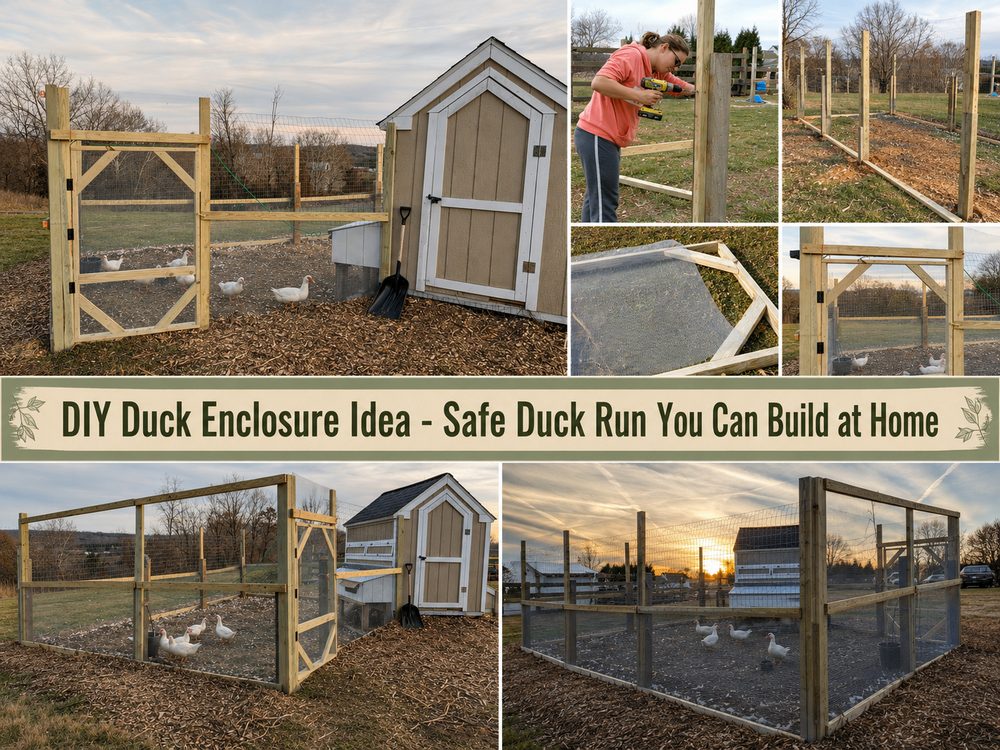
First, choose the location for the enclosure. Clear the ground and make sure the shape works well in your yard. Mark the outline so you know the size before you build. Simple rectangular layouts are typically the easiest to frame and fence.
Step 2: Construct the Main Frame
Build the basic structure with wood framing members. The tutorial includes a practical run using mostly readily available materials, so this project can be adaptable if you already have some supplies. Build the outside frame first, then add in some upright supports to give the run strength and shape.
Step 3: Add Support & Posts
When the main shape is done pin the vertical pieces and reinforce the corners. And the enclosure begins to feel solid and sturdy here. Adjust as necessary so the frame is level and the sides are flush.
Step 4: Connecting the Wiring
Sides may be covered with wire mesh or fencing material. Gently pull it into place so it stays neat and secure. Secure it well around the frame, especially at the edges and corners and any opening where there will be a door. This part is important as it helps to create the safe enclosed place your ducks will live.
Step 5: Build the Entry Area
Add a simple gate or doorsection so you can get in to feed clean and do daily care. Make sure it opens easily and closes well. If the doors are in a practical location, the run will be much easier to use over the long term.
Step 6: Styling and finishing
Once the enclosure is constructed, inspect for rough edges, gaps, loose mesh, or weak spots. Add in things your ducks will need like bedding in protected areas, access to water and open space to walk around. You can leave it looking simple and rustic, or blend it in with paint, stain or surrounding landscaping.
Helpful Hints:
Take measurements before you cut any material
First test the layout, so the run fits your yard well
Build with squared frame
Ensure the wire is neat and free of loose ends.
Make it simple for you to use every day
If the enclosure is to be left outside all year, use durable materials
What to Avoid:
Don’t cut wood without checking your layout.
Using fencing that is too weak or flimsy
getting in door too small or awkward to
leaving space around the frame or gate
Support pieces overlooking keeping the run strong
Construction without planning ahead in a wet or poorly drained area
Customisation Ideas
Depending on your setup, you can make this enclosure more decorative or more practical. Try adjusting the size, adding a roof section, using painted or stained wood, creating a shaded corner, or attaching feeders and water stations in a way that works with your routine. You can also add natural elements such as planters, mulch paths or a simple border around the outside.
Styling Hints:
This type of duck run works great in a backyard homestead, side yard or garden area. It works best used with a matching duck house, a nearby pond setup, or simple rustic outdoor décor. Natural or purely functional, farmhouse-style or otherwise.
Care Guide:
Inspect the enclosure often for exposed wire, loose fasteners and mud spots. Keep feeding and watering areas clean and replace broken parts before they become bigger problems. Paint or seal any wood with outdoor-safe finishes, and reapply as needed.
Time Required:
This project can take a short afternoon, or a few hours depending on materials, size, drying time, and detail.
Budgeting tips:
This can be a pretty cheap project, especially if you already have some wood or building materials laying around. Recycled materials also may help reduce the cost further.
Conclusion:
A simple DIY duck enclosure is one of the most useful backyard projects you can make for your flock. It helps create a safer, more organized space and can be adjusted to suit your yard, style, and duck-keeping routine. With a basic frame, sturdy wire, and a thoughtful layout, you can build something practical that works well and still looks nice in your outdoor space.
FAQs:
1. Is this beginner-friendly?
Yes, it looks suitable for confident beginners who can handle simple measuring, cutting, and assembly.
2. What materials are best?
Outdoor-safe framing wood and strong wire mesh are the best starting choices.
3. Can I make it bigger or smaller?
Yes, this style is easy to scale based on your ducks and available yard space.
4. Can I use recycled materials?
Yes, as long as they are clean, sturdy, and safe for outdoor use.
5. Can I use it outdoors all year?
Yes, but stronger weather-resistant materials will hold up better over time.