
A slouchy or hobo-style bag is meant to fold softly, but it should not become a long, shapeless sack as soon as it is filled. The difference comes from controlled drape: enough flexibility to create the relaxed silhouette, with stable seams and strap areas that limit unwanted stretch.
The embedded video demonstrates a fast one-piece construction. One-piece designs reduce seaming, but they also place shaping and load across the same fabric. This guide explains how to test drape, monitor symmetry, strengthen the stress points, and decide whether a lining will improve the final bag.
The goal is not to remove the slouch. It is to keep the slouch intentional.
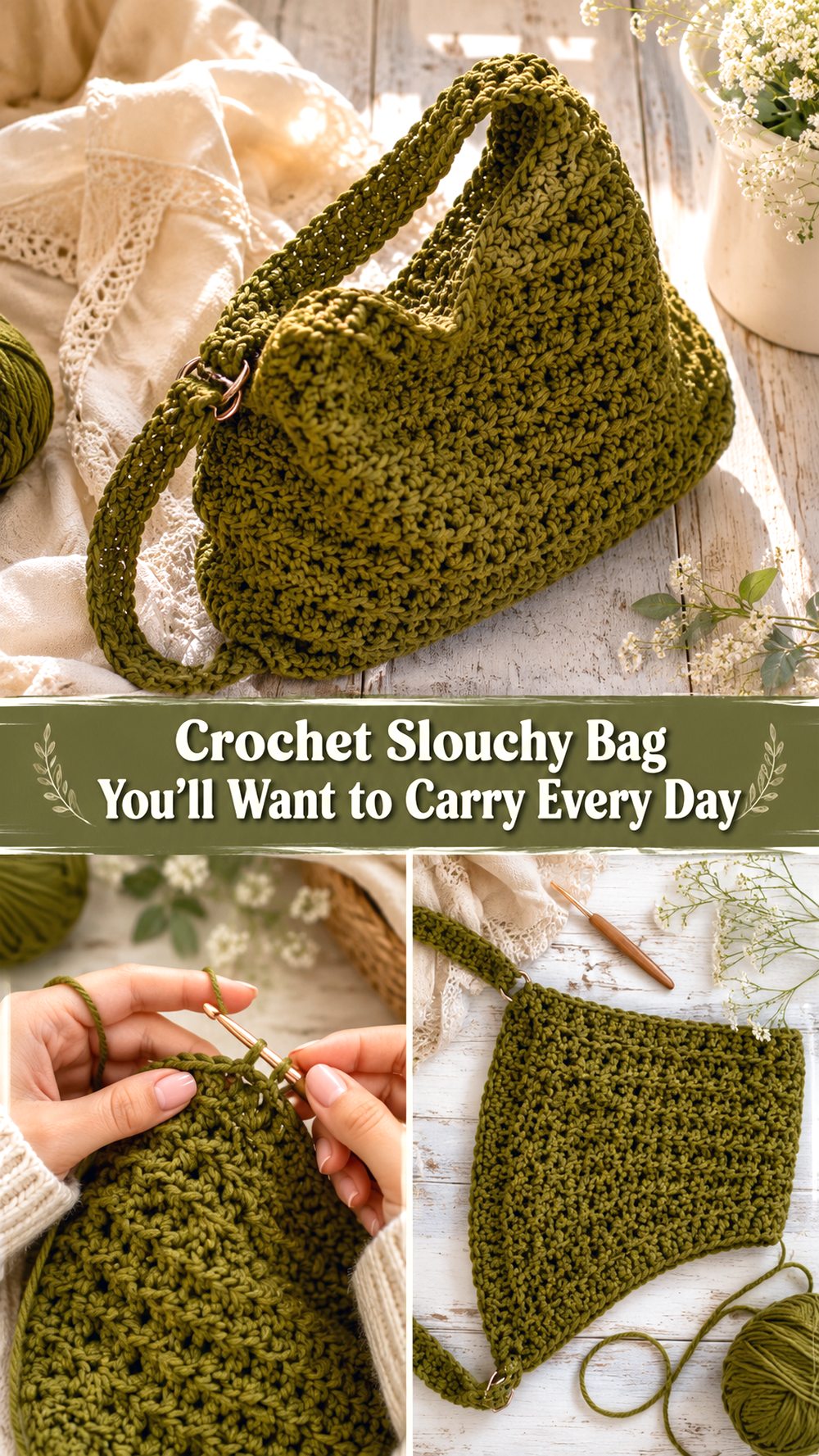
Understand the Shape Before Crocheting
Study how the flat piece folds into the finished bag. Identify the center bottom, side folds, opening and handle area. Mark these points on a paper sketch. A one-piece bag can look confusing while flat, and a simple map helps prevent joining the wrong edges.
Check whether the finished capacity comes from width, depth or both. Increasing every dimension can change the silhouette and move the lowest point of the bag too far down.
Test Drape With a Hanging Swatch
A flat swatch on a table does not show slouch. Hang the swatch from two corners and place a small weight in the center. Look for smooth folds rather than sharp stretching around individual stitches.
Wash and dry the swatch as the yarn label directs. Some fibers relax significantly after washing. Choose the hook only after seeing the settled fabric, especially if the bag is meant for regular use.
Choose Yarn That Can Recover
A soft yarn creates attractive folds, but a yarn with no recovery can continue lengthening. A blend may provide a balance of softness and stability. Smooth yarn also reduces friction against clothing and makes the surface easier to inspect for wear.
Avoid very fuzzy yarn if the stitch structure or shaping needs to remain visible. Fuzz can hide missed stitches and may pill where the bag rubs against the body.
Keep One-Piece Shaping Symmetrical
Use markers at the center and matching shaping points. Count the stitches between markers after each increase or decrease section. A small mismatch can shift the opening and make one handle side longer than the other.
Fold the work into bag shape several times during construction. Do not wait until the final seam to discover that the sides do not meet.
Make Seams That Move With the Fabric
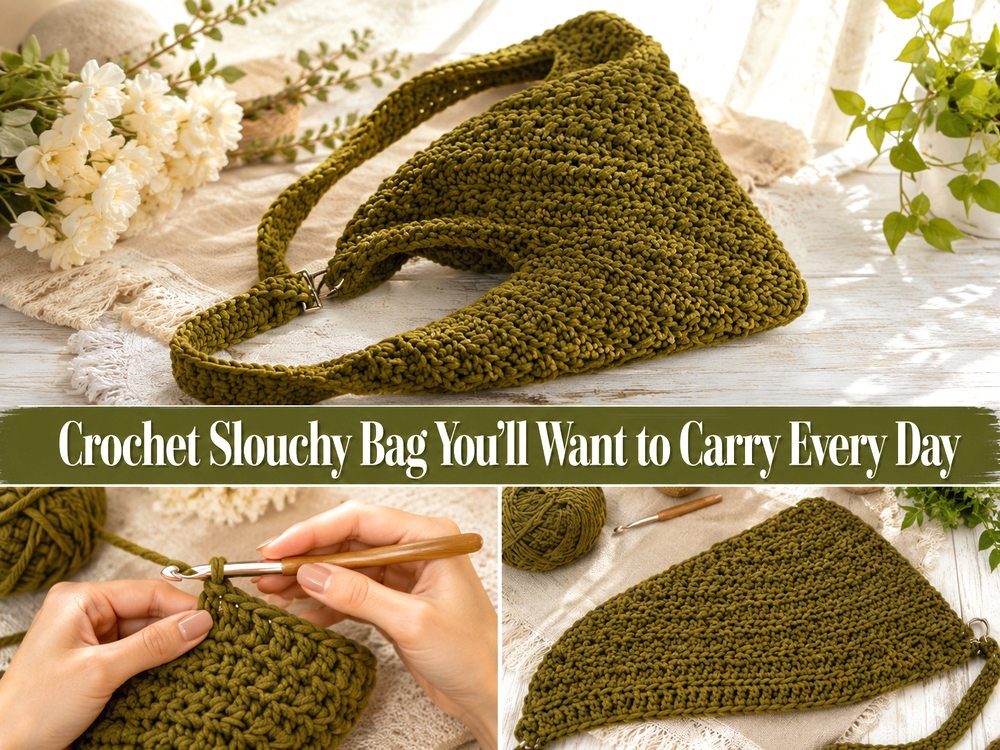
A very rigid seam can create a hard ridge in an otherwise soft bag, while a loose seam can open under weight. Choose a joining method that is secure but still flexible. Work through complete edge stitches and keep the seam allowance even.
Reinforce the bottom corner and handle transition where several forces meet. Weave seam tails over a long path and change direction so they are less likely to work free.
Control the Handle Area
Some slouchy bags continue directly into an integrated handle. This looks clean but can stretch at the narrowest point. Measure the handle opening on the wearer and test it with the bag loaded.
A stable edging around the handle can reduce stretching. Work it carefully so it does not tighten the opening or make the fabric pucker. For heavy use, add hidden fabric reinforcement inside the handle.
Decide Whether to Line It
An unlined hobo bag gives the softest drape. A lightweight lining can keep small objects inside while allowing the bag to fold. A heavy, stiff lining may fight the intended shape.
Cut the lining with enough ease to follow the bag’s lowest point. Support it at the upper edge and selected seam points so the weight is not carried only by a few hand stitches.
Use and Care
Load the bag gradually and watch where the fabric stretches most. A slouchy bag is best for moderate contents rather than dense books or several bottles. Distribute small heavy items in pockets or pouches.
Store it folded, not hanging from the handle. Clean according to the yarn label and dry flat with the folds arranged naturally.
Common Problems to Avoid
Choosing a very stretchy yarn because softness alone looked attractive.
Changing the size without mapping how the one-piece shape will fold.
Using an extremely tight seam that creates a rigid ridge.
Making the lining too stiff for the intended slouch.
Storing the bag full or hanging it by the handle for long periods.
Creator Credit and Tutorial
Tutorial: Super easy and fast hobo crochet bag—one-piece slouchy bag
Creator: Credited YouTube creator in the embedded tutorial
Watch the full tutorial: https://www.youtube.com/watch?v=2f4NFIQqyp4
Please follow the creator’s exact stitch counts, joining sequence, and demonstrated construction. Use the planning checks in this article when changing size, yarn, strap length, coverage or finishing.
Final Thoughts
A good slouchy bag keeps its relaxed folds while protecting the handle and seams from excessive stretch. Yarn choice and a hanging swatch are more useful than trying to block the finished bag into shape.
Frequently Asked Questions
Why did my slouchy bag become much longer?
The yarn or stitch structure may stretch vertically under load. A hanging swatch and handle reinforcement help predict and control this.
Can I make the bag larger?
Yes, but change the flat shape proportionally and recheck the handle opening, lowest point and seam positions.
What lining works best?
A lightweight woven fabric usually preserves drape better than heavy interfacing. Make a test fold with the crochet shell before sewing.
Is this bag suitable for books?
A soft hobo bag is better for moderate, distributed loads. Heavy books may distort the base and handle unless the bag is specifically reinforced.
How can I reduce pilling?
Choose a smoother, more tightly spun yarn and avoid rough surfaces. Remove pills gently without cutting the structural strands.