A crochet ruffle shoulder bag can look soft and decorative without becoming impractical. The most important decisions are not only the color and stitch. The body needs enough firmness to carry everyday items, the ruffle needs room to open without pulling the edge inward, and the handle must be attached strongly enough to resist stretching.
The credited video shows a beginner-friendly shoulder bag with a narrow body of about 24 cm, a wider ruffled section of about 34 cm, and a handle around 38 cm long and 5 cm wide. The creator also lists chunky wool, a 6 mm hook and a single-crochet gauge of 11 stitches by 14 rows over 10 cm. Those details give readers a useful starting point, but gauge, fiber and personal tension can still change the finished size.
This guide explains the planning checks that are easy to miss while following a video: how to judge the bag size, test the ruffle, reduce handle stretch, decide whether a lining is useful, and finish the project so it stays neat after regular use.

Decide What the Bag Needs to Carry
Before choosing yarn, place the items you expect to carry together: phone, small wallet, keys, tissues and any other daily essentials. Measure the group rather than guessing. A compact ruffle bag should close without forcing the ruffled edge outward, and hard objects should not press sharply against the stitches.
For light use, the tutorial size may be enough. For a larger phone or bulky wallet, increase the flat body width before adding the ruffle. Avoid making the bag much deeper without also strengthening the handle, because extra capacity usually means extra weight.
Choose Yarn for Shape, Not Only Softness
Chunky yarn makes the stitches visible and helps the project grow quickly, but two chunky yarns can behave very differently. A smooth, tightly spun yarn usually gives a cleaner bag surface and clearer ruffles. A very soft or loosely spun yarn may look attractive at first but can pill, stretch or lose definition around the handle.
Make a small swatch in the main stitch and hold it vertically for a few minutes. If it lengthens quickly under its own weight, expect the finished bag and handle to stretch. A smaller hook may create a firmer fabric, but the swatch should still bend comfortably rather than feel stiff and board-like.
Use the Gauge as a Size Check
The creator’s stated gauge is useful because it lets readers compare their fabric before committing to the full bag. Measure a relaxed swatch without pulling it. More stitches in 10 cm usually produce a smaller, denser bag; fewer stitches usually produce a larger, looser one.
Gauge matters here even though the bag is not fitted clothing. It affects capacity, ruffle depth, handle width and the amount of yarn needed. If your swatch is far from the tutorial gauge, adjust the hook or accept that your finished measurements will differ.
Build the Ruffle Without Distorting the Opening
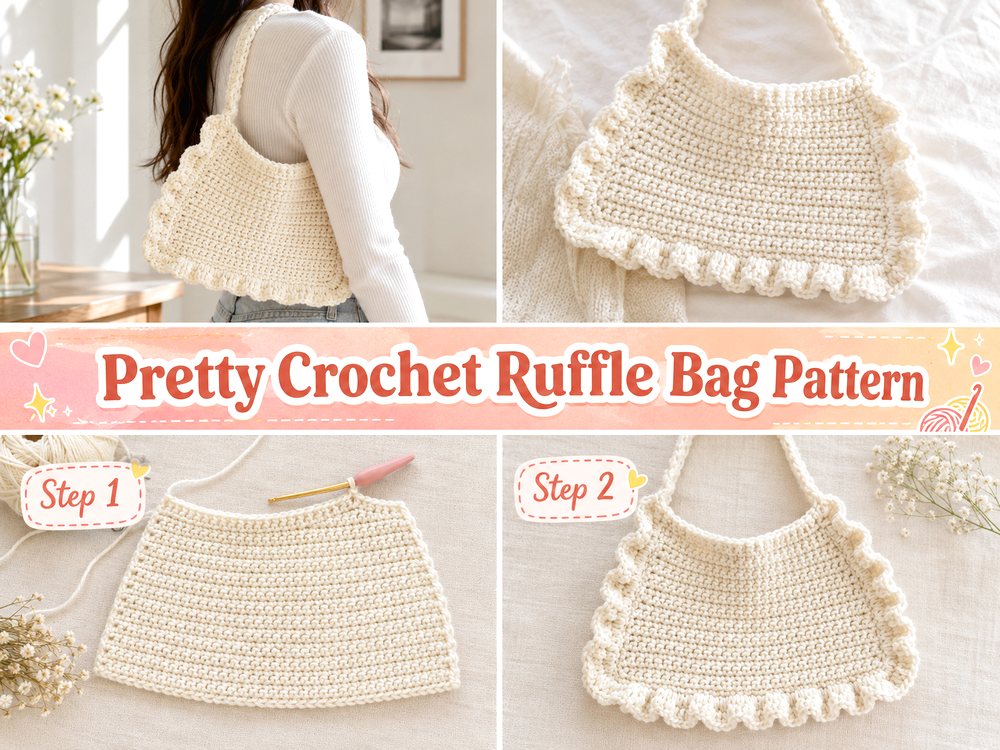
A ruffle is formed by adding fullness along an edge. The key is even distribution. Mark the opening into four equal sections before working the increase round or row. After adding the ruffle, compare all four sections. One crowded section can make the bag look twisted even when the stitch count is technically correct.
Lay the unfinished ruffle flat. It should wave and open naturally, but the bag opening underneath should remain smooth. If the base edge puckers tightly, the ruffle may have been worked with too much tension. If the ruffle barely moves, there may not be enough added fullness for the intended look.
Strengthen the Handle and Its Attachment
The handle carries the full load, so finishing matters more than decoration in this area. Work the handle with firm, even tension and test its length before permanent attachment. A 38 cm handle gives a compact shoulder or underarm drop for many users, but body size, clothing thickness and personal preference will change how it feels.
Pin or temporarily tie the handle to the bag, add the normal contents, and wear it for a few minutes. Check whether it sits comfortably and whether the top edge folds. When attaching it, spread the stitches over a wider section rather than concentrating the force in one small point. Sew through complete stitch structures, not only loose surface loops.
Add a Lining When It Solves a Real Problem
A lining is especially helpful when the crochet fabric has gaps, the yarn stretches easily, or the bag will carry keys and other pointed objects. Cut the lining only after the crochet body is complete and relaxed. A lining that is too small will pull the bag inward; one that is too large will bunch at the base.
A simple fabric pocket can also protect a phone from keys. Attach the lining below the decorative ruffle so the stitches remain visible. Hand-sew with small, even stitches and avoid pulling the thread so tightly that the top edge puckers.
Finish, Load-Test and Care for the Bag
Weave long yarn tails back through firm areas, especially around the handle. Trim them only after the bag has been loaded and checked. Place the intended contents inside for several hours and look for stretching at the handle, opening and base.
Follow the care instructions on the yarn label. Remove heavy contents before cleaning, support the bag when wet, reshape the ruffle by hand and dry it flat. Hanging a wet crochet bag can permanently lengthen the handle and body.
Common Problems to Avoid
Choosing a soft yarn without checking how much it stretches vertically.
Increasing for the ruffle unevenly and creating one crowded side.
Finishing the handle before testing the drop with the bag loaded.
Attaching the handle through only a few surface loops.
Making a lining from estimated measurements before the crochet body is finished.
Time Needed
This may take a few hours depending on your speed, yarn, size, and stitch pattern.
Conclusion
A crochet ruffle bag is a lovely project when you want to make something useful with a soft decorative touch. It is cute, wearable, and easy to personalize, which makes it a fun project to keep or gift.
FAQs
Is this project beginner-friendly?
Yes, the selected tutorial describes it as a very easy beginner-friendly ruffle bag.
Can I change the size?
Yes, you can repeat the main section until you reach your desired size.
Can I use any yarn?
You can use a yarn that gives you the look and texture you want, but smoother yarn usually helps the ruffles show nicely.
Is this a good gift idea?
Yes, it makes a cute and practical handmade gift.
Can I add a lining?
Yes, a lining can help the bag feel neater and give it a little extra support.