
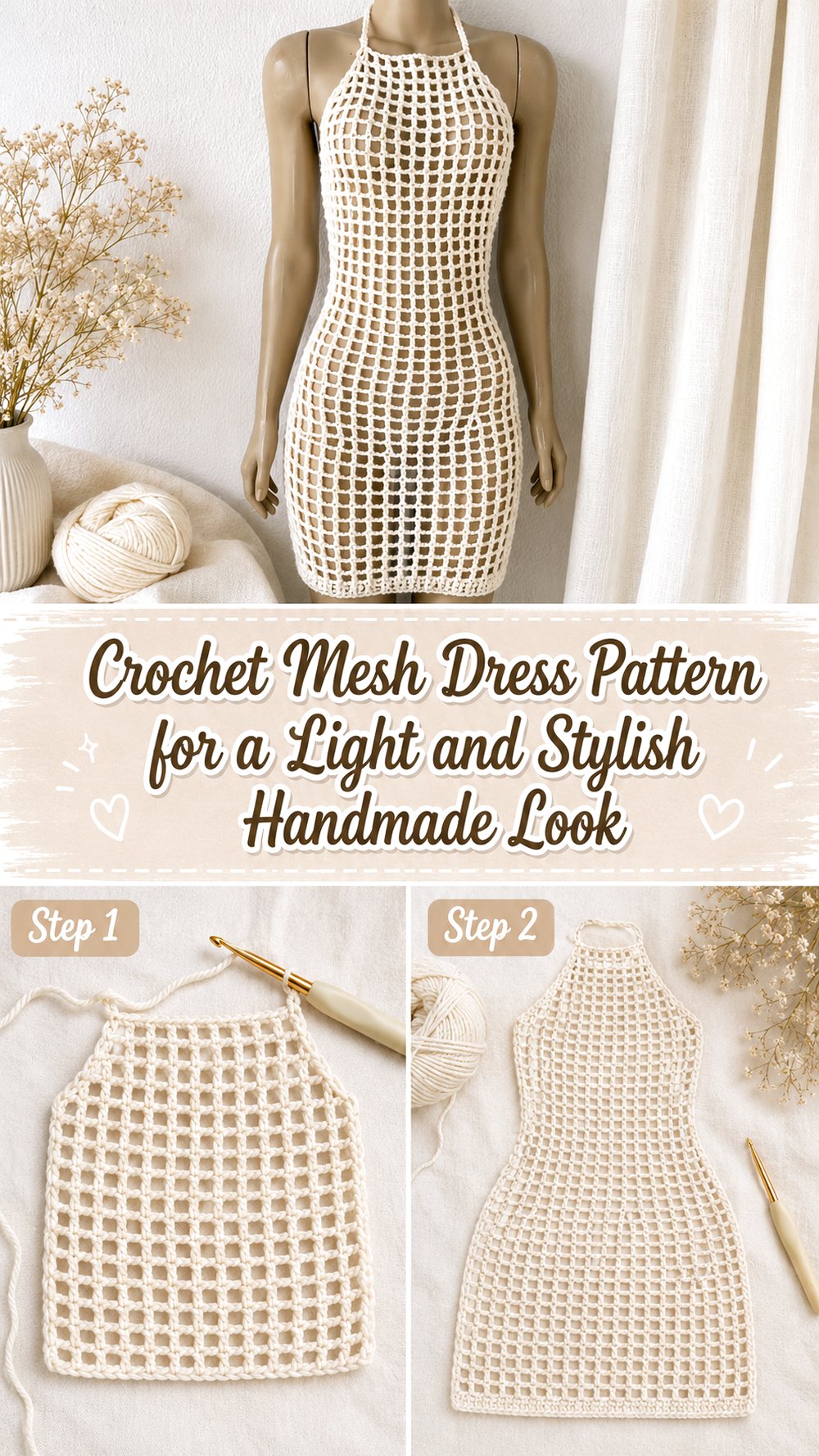
A crochet mesh dress looks simple because much of the fabric is made from chains and open spaces. In practice, the open structure makes fit planning more important, not less. Mesh can grow under its own weight, openings can become larger after washing, and a small change in tension can affect both coverage and the final length.
The credited video presents a short, beginner-friendly mesh dress based mainly on chain stitches and double crochet. This article is designed to sit beside that tutorial. It does not replace the creator’s stitch counts. Instead, it helps readers choose a size, understand ease, test the mesh, plan the neckline and armholes, and decide how the dress will be worn before committing to the full garment.
Treat the first swatch as part of the project. A ten-minute check at the beginning can prevent a dress that becomes too long, too transparent or too narrow after several hours of work.
Start With the Intended Use
Decide whether the piece will be a swimsuit cover-up, a layer over a fitted slip, or a dress worn over separate clothing. The answer changes how much coverage, ease and length you need. A beach cover-up can use larger openings and a looser fit. A layered dress normally benefits from smaller mesh, more stable shoulder areas and enough room for the garment underneath.
Choose the underlayer before measuring. A fitted slip and a swimsuit create different bust, hip and armhole requirements. Measure over the clothing you expect to wear with the finished crochet piece.
Measure the Body and a Well-Fitting Garment
Record the fullest bust, waist, fullest hip, shoulder-to-hem length and preferred armhole depth. Then measure a dress or cover-up that already fits well. The garment measurement helps you choose ease: the difference between body size and finished garment size.
Mesh usually looks better with some room to move, but too much ease can make the neckline and armholes fall outward. Pay special attention to the hip measurement if the dress is worked straight from top to bottom. A body-skimming upper section may still need added width before the hips.
Swatch the Actual Mesh Pattern
Work a swatch large enough to include several complete mesh repeats. Measure it flat, gently stretch it sideways, then hang it for several hours with a little weight clipped to the lower edge. Measure again. This shows how much the fabric may grow when the full dress is hanging from the shoulders.
Wash the swatch according to the yarn label and let it dry flat. Check the opening size, softness, recovery and transparency over the planned underlayer. If the holes become much larger, use a smaller hook, a more stable yarn or a denser mesh repeat.
Choose Fiber for Comfort and Recovery

Cotton and cotton blends are popular for warm-weather crochet because they can feel breathable and show stitch definition clearly. Pure cotton can also become heavy and may not spring back quickly. A blend with a small amount of synthetic fiber may reduce weight or improve recovery, depending on the yarn.
Avoid judging yarn only by the skein. Crochet the mesh and rub it lightly against the neck and inner arm. A yarn that feels acceptable in the hand can feel rough when a whole garment moves against the skin. Also check whether the yarn splits when worked through chains, because frequent splitting can make openwork slow and uneven.
Control the Neckline, Shoulders and Armholes
The shoulders carry the entire garment. A very open stitch at the shoulder can stretch more than the same stitch near the hem. Consider a denser row around the neckline and shoulder area, or add a stable edging after the main body is complete.
Try the piece on before the armholes are fully finished. Raise both arms, reach forward and sit down. The armhole should not cut into the underarm, but it also should not expose more of the underlayer than intended. If the neckline grows after trying on, a final row worked with a slightly smaller hook can help stabilize it.
Plan Length With Vertical Growth in Mind
Do not stop at the exact finished length while the dress is still on the hook. Let the unfinished garment hang overnight, then check it again over the planned underlayer. Mesh often lengthens once the full weight is present.
For a short dress, check coverage while standing, sitting and walking. If adding fringe or a decorative border, include that extra length in the plan. A border can add more than expected and can also pull open the mesh directly above it.
Keep Pattern Repeats Easy to Audit
Place a marker at the beginning of each round and another marker at the side or quarter points. Count mesh spaces at regular intervals instead of waiting until the end. If one repeat is missed, the error may travel diagonally and become difficult to hide.
Lay the work flat with the side markers aligned. Compare the front and back width and check that the hem remains level. Correct a growing stitch-count problem early rather than trying to force the garment into shape during blocking.
Finish and Care for Openwork
Weave ends through denser stitch areas rather than across open chain spaces. Loose tails are more visible in mesh and can work free when the garment stretches. Check every joining point at the shoulder and underarm.
Wash according to the yarn label, support the garment when lifting it from water and dry it flat. Store it folded. Hanging mesh clothing for long periods can lengthen the shoulders and body.
Common Problems to Avoid
Measuring the dress without the slip or clothing that will be worn underneath.
Using a tiny swatch that does not show the real mesh repeat or vertical growth.
Making the same width from bust to hip without checking body measurements.
Adding a heavy border before allowing the garment to hang and settle.
Weaving ends only through chain spaces where they remain visible and insecure.
Time Needed
This may take a few hours depending on your speed, yarn, size, and stitch pattern.
Conclusion
If you want a crochet dress that feels stylish but still approachable, this mesh design is a great one to try. It is simple to adjust, fun to wear, and easy to make your own.
FAQs
Is this dress good for beginners?
Yes, it looks suitable for beginners because it mainly uses simple stitches.
What yarn works best?
Cotton or a cotton blend is usually a great choice for this type of airy dress.
Can I make it longer?
Yes, just keep repeating the main pattern until you like the length.
Do I need exact measurements first?
Not always. You can compare the piece to your body or a similar dress as you work.
Can I wear it as a cover-up?
Yes, the open mesh style makes it a nice option for layering or beachwear.