
A top-down lace skirt is easy to lengthen, but it still needs careful planning at the waistband and hips. Lace can stretch under the weight of the lower rows, and an opening that fits the waist may not pass over the hips unless the waistband has enough elasticity or a separate closure.
The Evening Mist Skirt tutorial shows the lace construction. This guide focuses on the fit and finishing questions readers should solve around the video: how the skirt will be put on, where it should sit, how to choose ease, when to add a lining or slip, and how to block the lace without losing the intended measurements.
A successful skirt begins with the largest measurement it must pass over, not only the place where it will rest.
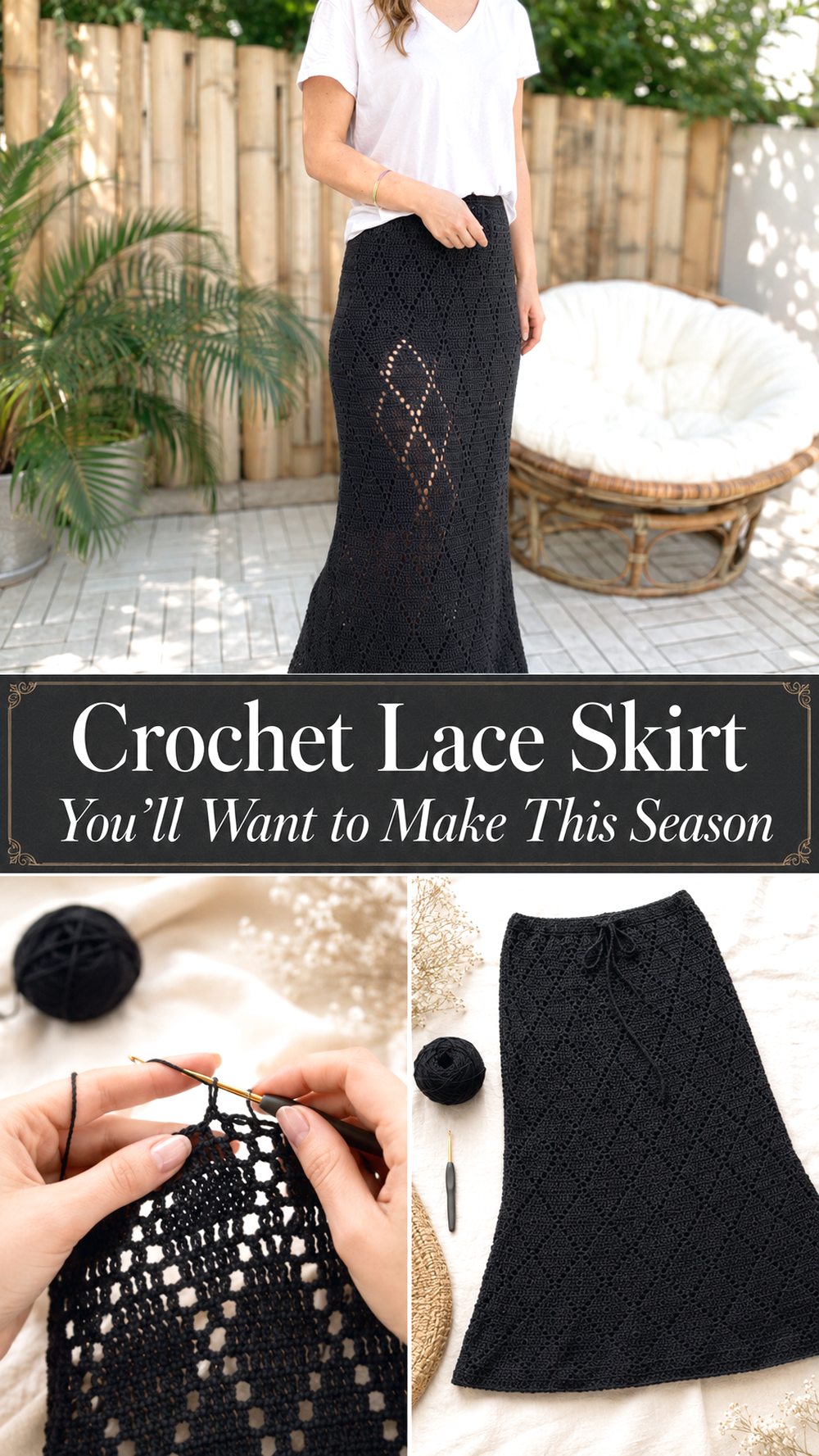
Choose the Wearing Position
Decide whether the waistband will sit at the natural waist, high hip or low hip. Measure that exact position, then measure the fullest hip. Also measure the vertical distance from the waistband to the fullest hip so any increases occur in the correct area.
If the skirt has no zipper or button opening, the waistband must stretch over the hips and recover at the waist. Test this requirement before completing the lace body.
Select a Waistband Method
A crocheted ribbed waistband can stretch, but its recovery depends on yarn and construction. An elastic inserted into a casing gives more predictable support. A drawstring allows adjustment but may create gathers and pressure at the waist.
Make a waistband sample and stretch it several times. If it remains longer, add elastic or choose a more stable construction. Secure elastic joins flat so they do not create a hard lump.
Swatch the Lace and Its Repeat
Work at least three repeats across and several repeats vertically. Wash and block the swatch using the method planned for the skirt. Measure the repeat after it is fully dry.
Check how the lace looks over the intended slip or lining color. Also note whether the holes enlarge when the swatch is stretched sideways over the hip.
Plan Hip Ease
The skirt should allow walking and sitting without pulling the lace repeat flat. Compare the finished circumference with the fullest hip and the stretch of the blocked swatch. Add increases gradually before or around the hip rather than suddenly below it.
Try on the top section before working many lower repeats. Sit, climb one step and take a long stride. The waistband should stay in place and the lace should not feel strained.
Keep Lace Repeats Aligned
Use markers to divide the skirt into equal sections. Count complete repeats at the end of every shaping round. If increases are part of the design, place them symmetrically so the front and back hang evenly.
A missed chain or stitch can shift the next row. Check the work against the stitch logic of the repeat rather than relying only on the total count.
Choose Lining or a Separate Slip
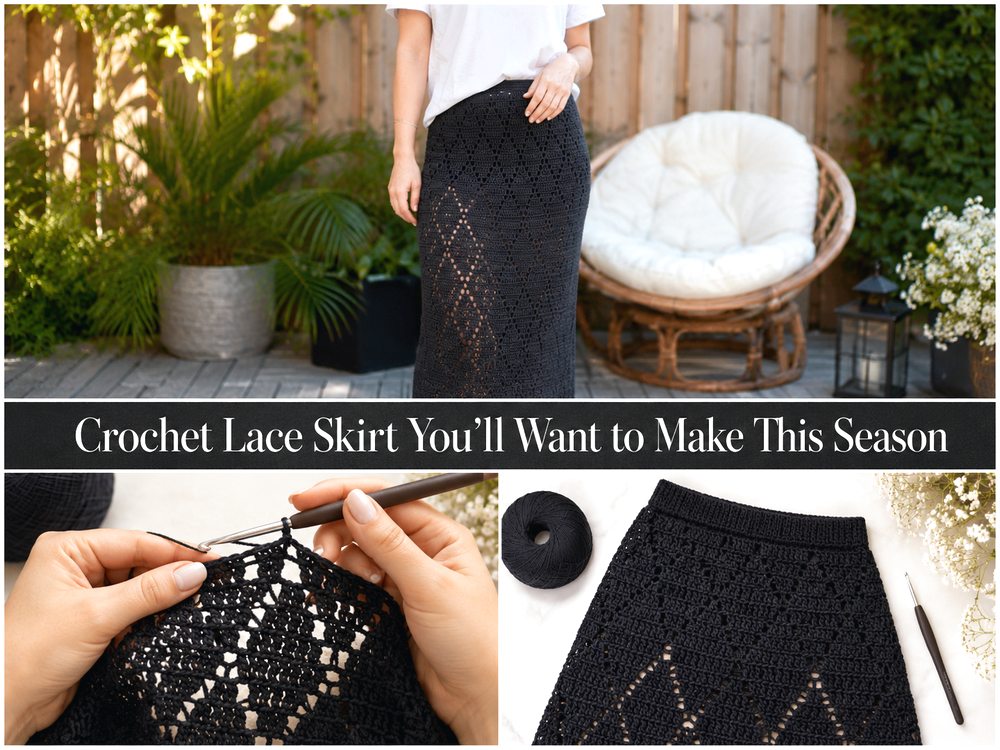
A separate slip is flexible, washable on its own and easy to change for different looks. A sewn-in lining stays aligned but must allow the same hip movement as the crochet shell. It should be attached without restricting the waistband stretch.
Use a lightweight, opaque fabric with enough ease for sitting. Test static cling and color contrast. The lining can end above the lace hem to show the lower motif while maintaining coverage.
Set Length After the Skirt Settles
Hang the unfinished skirt from the waistband overnight. Lace may lengthen as more rows are added. Try it on with the waistband fully finished and the intended shoes before deciding the final repeat.
A decorative border often adds both length and weight. Work a small sample of the border if its depth is not obvious from the tutorial.
Block Without Overstretching
Blocking should open the lace evenly, not force the skirt to a size the stitches cannot hold. Measure the waistband, hip and length before wetting. Shape the skirt to those target dimensions and allow it to dry completely.
Follow the yarn label for care. Store the skirt folded and support it when wet. Long-term hanging can stretch the waistband and lace.
Common Problems to Avoid
Making the waistband to the waist measurement when it also has to pass over the hips.
Working many lace repeats before checking hip movement.
Attaching a lining that prevents the waistband from stretching.
Blocking the lace aggressively and permanently enlarging the skirt.
Adding a heavy border without checking vertical growth.
Creator Credit and Tutorial
Tutorial: Evening Mist Skirt – easy top-down lace skirt tutorial
Creator: Credited YouTube creator in the embedded tutorial
Watch the full tutorial: https://www.youtube.com/watch?v=KFh5qflnX_8
Please follow the creator’s exact stitch counts, joining sequence and demonstrated construction. Use the planning checks in this article when changing size, yarn, strap length, coverage or finishing.
Final Thoughts
The waistband, hip ease and lining determine whether a lace skirt is genuinely wearable. The lace repeat and final length are easier to manage once those structural decisions are settled.
Frequently Asked Questions
Should I use elastic in the waistband?
Elastic is useful when the crochet waistband does not recover well or when the skirt needs reliable support. Enclose it neatly and check comfort.
How much hip ease is needed?
Enough to sit and walk without flattening or straining the lace. Use the blocked swatch and a similar well-fitting skirt as guides.
Can I wear the skirt without a lining?
Only when the lace coverage and intended setting make that comfortable. A separate slip is an easy, flexible option.
Why is my hem uneven?
Uneven repeat counts, off-center increases or variable tension can change length. Mark sections and compare them regularly.
Can I shorten the skirt later?
It may be possible to remove lower repeats if construction allows, but planning the settled length before the border is cleaner.nd lay flat to dry.