When labels use words like lace, DK, worsted, bulky or jumbo, it can feel confusing to choose yarn. Crochet yarn weight refers to how thick the individual strand of yarn is, not how much the entire ball of yarn weighs.
The thickness of the yarn will impact your hook size, stitch definition, gauge and finished fabric. This beginner-friendly chart breaks down the major yarn weight categories, how to compare labels and what to do if a yarn looks too thick or thin for your project.
Crochet Yarn Weight Chart
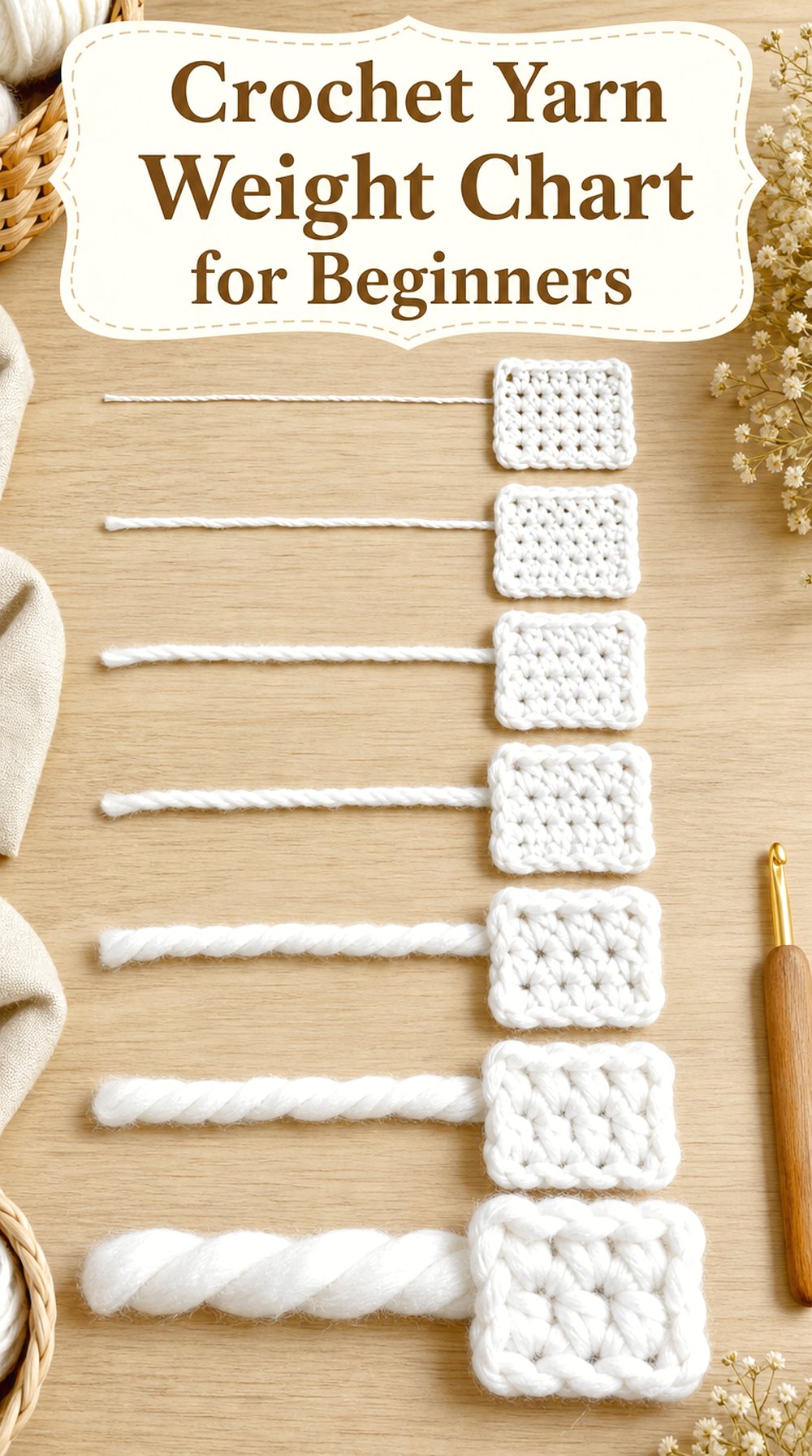
The standard yarn weight system uses numbers from 0 to 7. Weight 0 is the thinnest yarn category, while weight 7 is the thickest. Use the chart below as a starting point when matching yarn with a crochet hook.
| Weight Number | Yarn Category | Common Yarn Names | Recommended Crochet Hook |
|---|---|---|---|
| 0 | Lace | Fingering, 10-count crochet thread | Steel hook: 1.4–1.6 mm or regular hook: 2.25 mm |
| 1 | Super Fine | Sock, fingering, baby | 2.25–3.5 mm |
| 2 | Fine | Sport, baby | 3.5–4.5 mm |
| 3 | Light | DK, light worsted | 4.5–5.5 mm |
| 4 | Medium | Worsted, afghan, aran | 5.5–6.5 mm |
| 5 | Bulky | Chunky, craft, rug | 6.5–9 mm |
| 6 | Super Bulky | Super bulky, roving | 9–15 mm |
| 7 | Jumbo | Jumbo, roving | 15 mm and larger |
These hook sizes are general starting points rather than strict rules. Always check the hook size and gauge given in your pattern or on the yarn label. Make a small gauge swatch before beginning a fitted or size-sensitive project because yarn construction, fibre type and personal tension can affect the finished result., fibre and personal tension can affect the best hook size.
This is what yarn weight confusion looks like
If you have used the wrong weight of yarn you may have:
- The pattern measurement is much wider or narrower than what you are making.
- Your fabric is too stiff, too loose, or too full of gaps.
- Pattern gauge does not match.
- The hook is hard to get into your stitches.
- The finished item uses a lot more or less yarn than you thought it would.
- There are two yarns with similar names but very different thickness.
The yarn weight number is more useful than names such as “baby,” “chunky” or “afghan,” because these names can vary from yarn manufacturer to yarn manufacturer and country to country.
1. What is Yarn Weight Numbers?
The number printed on the label of the yarn identifies its general thickness category. Number 0 is the thinnest, number 7 is the thickest.
A yarn marked with a 4 is of medium weight and is often comfortable for beginners to use. It is thick enough to see the stitches but not so thick that the fabric becomes difficult to work with.
How to Use the Number
Check the yarn symbol on the label before you buy. Compare this to the yarn weight your pattern calls for.
For example, if the pattern calls for number 4 medium yarn, choose another number 4 yarn to substitute. Two yarns in the same category may not be the same so make a gauge swatch before starting the whole project.
2. Matching Yarn Weight With Hook Size
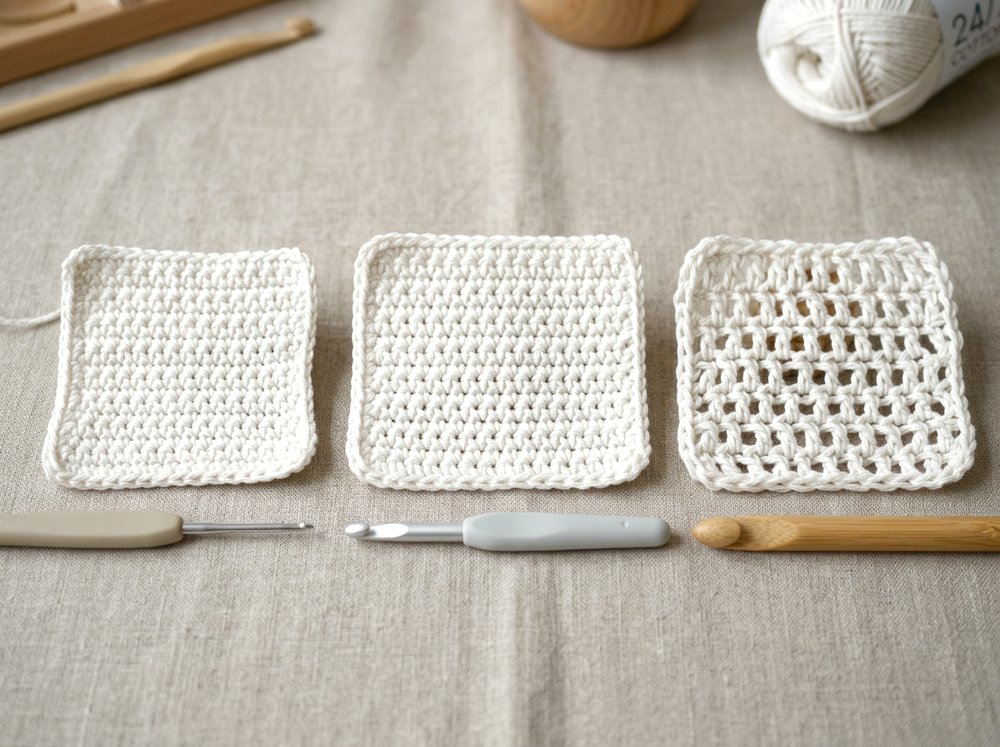
Thinner yarn generally requires a smaller crochet hook. Thicker yarn usually means a bigger hook. The loops created by the hook need to be large enough to work comfortably without making the fabric too loose.
You can get stiff fabric and tight stitches if your hook is too small. If your hook is too big, it can create large stitches, holes and loose fabric.
How to Pick the Hook
Begin with the hook size suggested by the pattern. If there is no pattern, use the gauge on the yarn label.
Make a small crochet swatch and check the fabric:
- If the stitches look tight or stiff, go up a hook size.
- If your stitches are loose and/or have extra holes, use a smaller hook.
- Leave the current hook when the fabric has the drape and firmness you require.
3. Comparison of common yarn name
You will know words like fingering , sport , DK , worsted , bulky to indicate how thick the yarn is . The names, however, are not always used consistently.
DK yarn is generally number 3 light. The usual worsted yarn is number 4, medium. Chunky yarn is usually number 5 bulky, but some of the yarns that are chunky may lean toward super bulky.
US & UK yarn descriptions can differ also. For example, UK double knitting yarn is often called DK yarn, while the term “worsted” is more common in the US.
How to Avoid Mistakes
Use the numbered weight symbol, recommended gauge and metres or yards per gram as comparison clues. Don’t just trust the big product name printed on the label.
Compare strand thickness when substituting yarn and crochet a gauge swatch.
4. How to Check Yarn Without a Label
It can be difficult to identify yarn without a label as soft, fluffy or tightly spun yarn may appear thicker or thinner than it actually is.
One useful measure is wraps per inch, often abbreviated to WPI. Neatly wound about a ruler, without pulling or leaving any gaps. How many strands will fit in an inch. More wraps means thinner yarn, fewer wraps means thicker yarn.
How to Know the Weight
Take an unknown yarn and compare it to a labelled yarn from your collection. Do not pull. Just lay the strands next to each other.
You can also crochet little swatches with 2 or 3 potential hook sizes. Choose a yarn category that will make a fabric that is close to what the project calls for. WPI is an estimate so check reading with gauge.
5. Substituting with a Different Yarn
A substitute yarn should be comparable to the original yarn in thickness, fibre behaviour and recommended gauge. The weight number match may not be enough.
Cotton can often give you tight, precise stitches. Wool may be springier and easier to stop. Acrylic can be soft and flexible, or dense and sturdy. Fluffy yarn can give the same gauge as a smoother yarn but look much thicker.
How to Make Successful Substitutes
Start with the same category of yarn weight. Then compare the suggested hook size to the label gauge.
Make a swatch using the stitch pattern from the project. It will be finished and treated, so wash it out or block it out. Measure the swatch only after it is dry.
If necessary, change the hook size. If the fabric is too stiff or too loose when you get a match, choose another yarn.
How to Avoid Yarn Weight Issues
- Before you buy yarn, read all of the pattern materials list.
- Check the yarn weight symbol on each label for the number.
- Purchase sufficient yarn from the same dye lot to ensure color consistency.
- Crochet, make a gauge swatch.
- Save the yarn label until you have completed your project.
- Compare the feel of the fabric and also the stitch measurements.
Should You Change Hook Size?
If the gauges are a bit off, just change the size of the hook. If your stitches are too large, use a smaller hook. If your stitches are too small, use a larger hook.
But a different hook doesn’t always fix a completely different yarn weight. For instance, using a chunky yarn instead of a DK yarn could alter the size, drape, stitch definition and yarn amounts too much.
Can blocking correct the wrong yarn weight?
Blocking can smooth stitches, improve drape and help a project meet a small adjustment in measurement. Some natural fibers may react more noticeably than some synthetic fibers.
Blocking will not fix a project made in a yarn that is too thick or too thin. It also can’t fix wrong stitch counts or large size differences. Don’t overheat, especially with synthetics.
When Is It Time to Undo the Rows?
If the fabric is obviously the wrong size, feels unsuitable or does not match the pattern measurements, unpick the work. It’s usually easier to frog a small bit early on than to try and fix an entire finished project.
If the item does not require an exact size and you are happy with the fabric, then you can proceed.
Quick Trouble Shooting Guide
Fabric is stiff Use a larger hook or check if the yarn is too thick.
Fabric has big holes: Use a smaller hook or a slightly thicker yarn.
Project is too wide Check gauge, stitch count and weight of yarn
Project too narrow: Check for tight tension, missed stitches or too thin yarn.
Yarn label has no number: Compare thickness, measure WPI, and make a swatch.
FAQ
What weight of yarn is the easiest for beginners?
A medium weight yarn, number 4, is practical because the stitches are generally easy to see and to work.
Worst is not the same as DK yarn.
No. DK is normally number 3 light and worsted normally number 4 medium.
Can I use 2 thin strands instead of thick yarn?
Sometimes. Two strands together will make a thicker yarn, but how thick and what kind of fabric you get will be a matter of testing with a gauge swatch.
Does the weight of the yarn determine how much yarn I need?
It does affect yarn usage but project size, stitch pattern, hook size and tension are also important.
Is ball weight the same as yarn weight?
No. Yarn Weight Is Strand Thickness. The weight of the ball tells you how many grams or ounces are in the package.
*Should I follow the hook size on the yarn label?
No. This is a proposed range. The last choice should be based on the pattern gauge and the fabric you require.
Concluding Comments
A crochet yarn weight chart will help you find the right hook and project for the yarn’s thickness. Check the number first from 0 to 7 and then compare the label gauge, fibre and recommended hook size.
If in doubt, do a little swatch. It’s the best way to check that your yarn and hook will produce the right size, feel and stitch look.