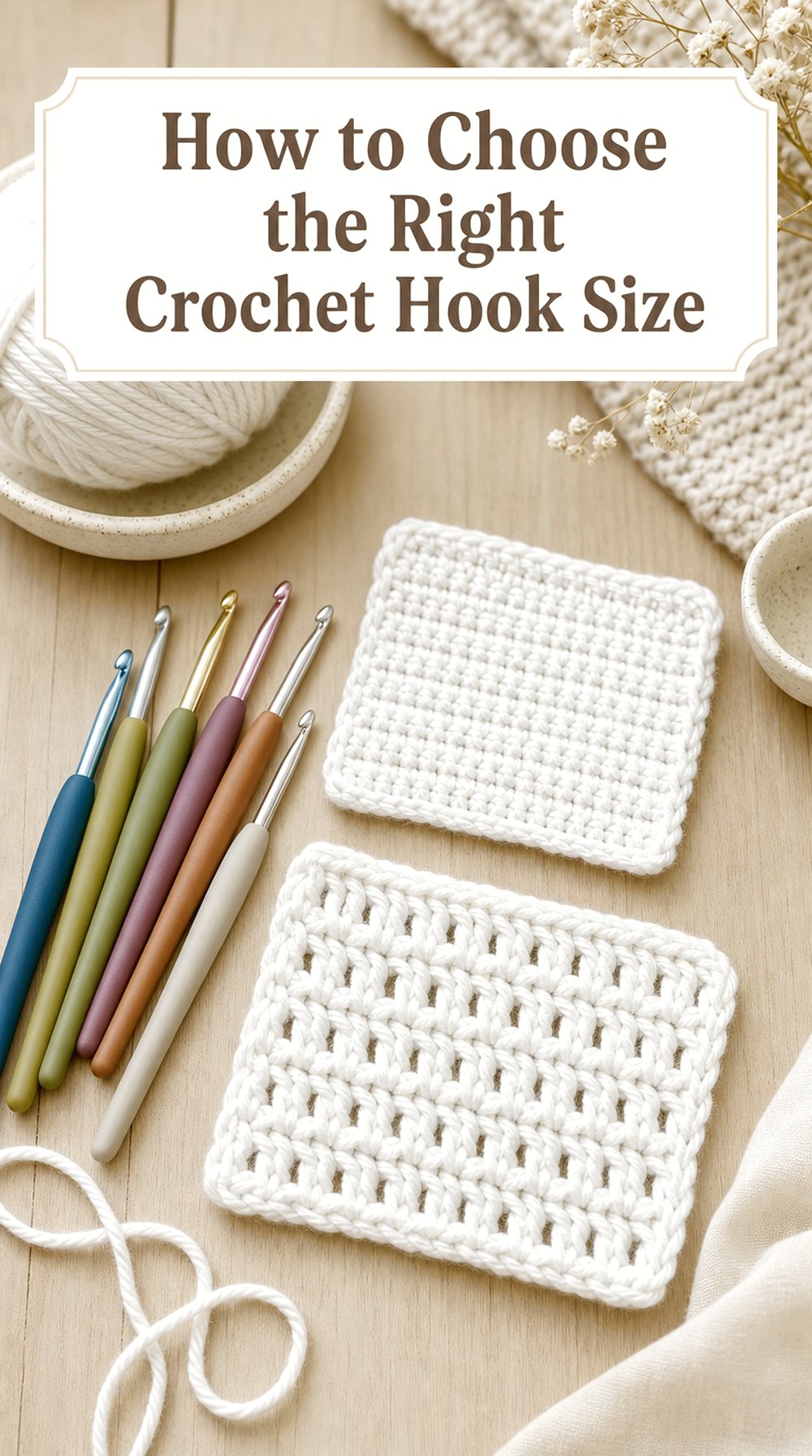
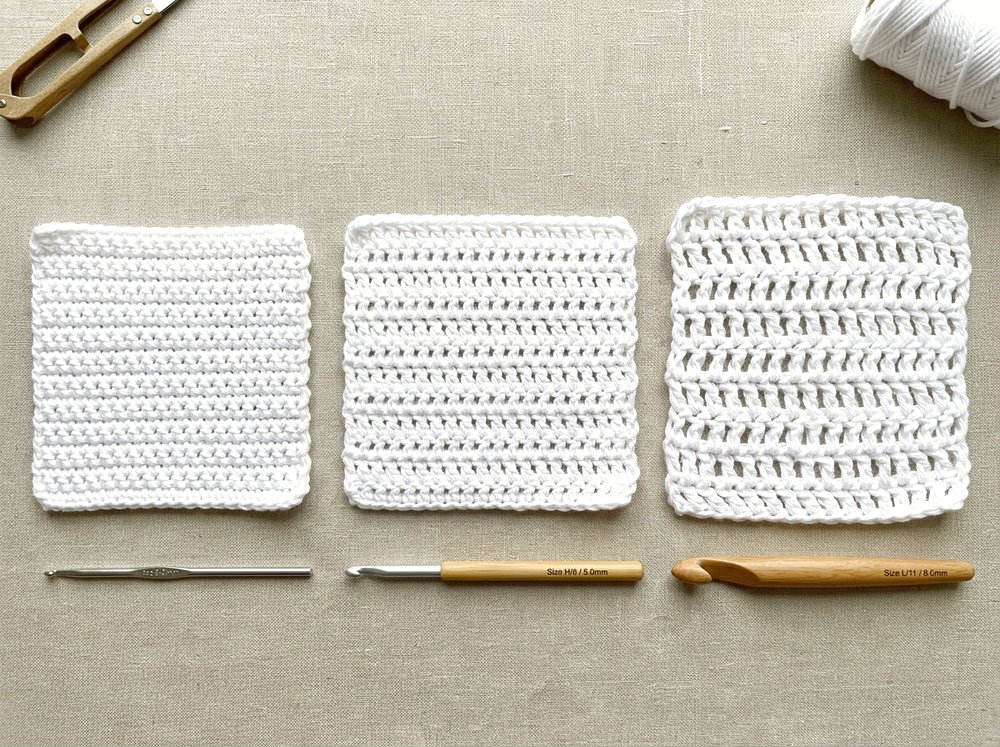
The choice of the right size crochet hook influences the look, size and feel of your finished fabric. The Crochet stitches will be tight and stiff if the hook is too small, and if the hook is too big, the stitches will be loose and will leave unwanted gaps.
The pattern and the yarn label are good places to start but they do not take into account your own tension. This guide will show you how to match a hook to your yarn, test your gauge and how to adjust the size for different projects.
What Does a Wrong Size Hook Look Like?
Signs your crochet hook may not be the correct size:
- Stiff, dense fabric: The hook may be too small
- Big gaps between stitches: your hook may be too big.
- Your project is too small Your hook or tension is too tight
- Oversized project Your hook or tension may be too loose.
- Hands get tired quickly: The hook may be too small for the yarn.
- Stuffing showing through amigurumi: The hook may be too big.
Correct size depends on the yarn, stitch pattern, desired fabric and your natural tension.
1. Pattern Recommendation begins
If you are working a pattern, begin with the hook size the designer suggests. That size was used to make the stated gauge and the finished measurements.
Check if the hook is in mm, US letter or both. US letter sizes do vary slightly between manufacturers, so millimetre measurements are generally more reliable.
How To Pick It
Use the size recommended for your first gauge swatch. It is not automatic to assume that it will give you the correct result.
After knitting enough rows to display your normal tension, measure the swatch. If the project is blocked or washed, treat the swatch the same way before measuring it.
Always choose pattern instructions over general hook-size charts.
2. Examine the Yarn Label
Most yarn labels tell you the recommended crochet hook range. This is a guideline for making a standard fabric, not a hard and fast rule.
Thicker yarn usually requires a bigger hook, fine yarn usually requires a smaller hook. Crochet thread is often used with small steel hooks , which may have a different numbering system .
How To Pick It
If not using a pattern, begin near the middle of the suggested range.
Make a small swatch and check it out:
- If the fabric is too loose, select a smaller hook.
- If the fabric is too stiff, use a larger hook.
- Select the right fabric for the project and keep the sizes when the stitches are comfortable.
Don’t just look at yarn weight names. Two yarns labelled the same weight may be different in terms of thickness, twist and texture.
3. Attach it to the Project
The best size hook also depends on what you are making.
A comfortable drape is normally needed with a blanket or scarf, so the fabric should bend and hang easily. A basket, bag or amigurumi project often requires a firmer fabric that will hold its shape.
How To Pick It
For soft garments, shawls and blankets use the suggested hook or one size larger. Make sure the fabric isn’t too loose, or the stitches will go out of shape.
For baskets and strong bags use the hook suggested or one size smaller.
For amigurumi, select a hook that makes tight stitches but not so tight that it hurts to insert the hook. The stuffing should be not visible through the fabric.
4. Make a Gauge Swatch and Measure
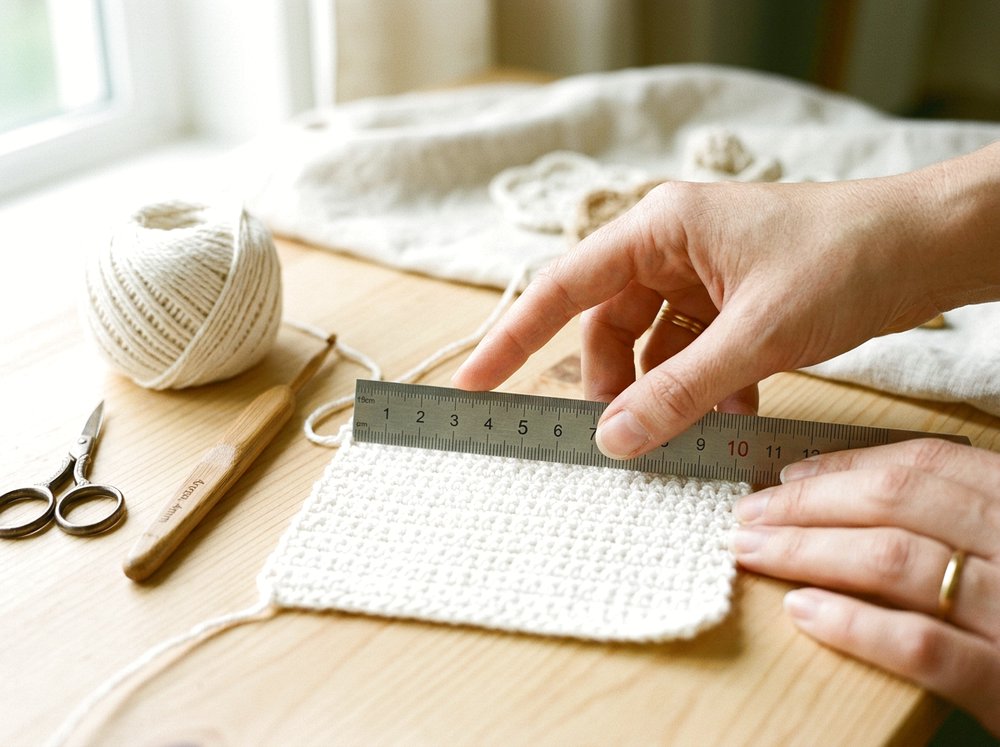
Gauge is the number of stitches and rows in a given space, generally 4 inches. It checks that a finished item will fit the pattern size.
Tension, yarn and stitch technique also affect gauge . Hook size is also a factor .
How to Fix Gauges
Crochet a larger swatch than the area you want to measure. Measure the center, not the edges.
Your stitches are too small if you have too many stitches within 4 inches. Change to a bigger hook.
Too few stitches within 4 inches means your stitches are too big. Switch to a smaller hook.
Repeat each adjustment on a new swatch. Sometimes 0.5 mm change can make a noticeable difference.
Row gauge can also vary with hook size but so can your stitch height and technique for turning.
5. Take into account your natural tension
Two crocheters using the same hook and the same yarn can have different results. Some grip the yarn tightly, others make looser loops.
How To Pick It
If your stitches tend to be tight all the time, try a hook half a millimetre larger than the recommended size. If your stitches always turn out loose, work with a hook that is 0.5 mm smaller.
Change things slowly, don’t change several sizes at once.
Also check your comfort zones. The hook should slide through the stitches with no push. If you are having to push or pull hard, loosen your grip or try a bigger hook.
If you change the material of your hook or the shape of the handle you may be more comfortable stitching, but always double check your gauge afterwards as your tension may have changed.
6. Try out the Stitch Pattern and Yarn Fibre
Different stitches work differently. Single crochet creates a denser fabric than double crochet. Lace patterns often require a larger hook to open up the spaces.
The yarn fibre also matters. Cotton can be stiff, wool can stretch out after washing, and some acrylic yarns hold their shape with little change.
How To Pick It
Make the swatch in the actual stitch pattern, not some other simple stitch.
If appropriate, wet-block or wash the swatch. Allow it to dry completely before measuring and judging the drape.
Synthetic yarn: Use gentle methods. Too much heat can flatten or damage the fibers.
How to Prevent Hook Size Problems
- Read the pattern’s hook & gauge info before you begin.
- Check the mill gauge printed on the hook.
- • Make a gauge swatch for fitted pieces and measured projects.
- Use the same yarn and stitch pattern you intend to use for the project.
- Wash or block before measuring, if finished piece is to be washed.
- Make note of the hook size so you can use the same size later.
Should You Change Hook Size?
If your gauge, fabric density or drape is off, adjust the hook size.
Don’t change your sizes because your hook is different than the pattern suggests. The hook that gives you the right gauge is more important than the hook the designer used.
Another hook won’t fix accidental increases, missed stitches or wrong stitch counts.
Can you fix the wrong hook size by blocking?
Blocking can smooth stitches, improve drape and slightly alter measurements. It can help a natural fiber fabric to relax.
But blocking is not a reliable way to fix a big gauge difference, or turn super-stiff fabric into loose fabric. Nor can it fix missing stitches, stitches added in error or shaping that isn’t quite right.
When Is It Time to Undo the Rows?
If the fabric is obviously too tight, too loose or way off the measurements, undo the work.
If you are not working with the correct gauge, it is usually better to start over with a small section than to keep going with a fitted garment. If it’s a scarf or a simple blanket, a small gauge difference is okay if you like the fabric and have enough yarn.
Quick Trouble Shooting Guide
The hook is not going into the stitches easily Try a larger hook or loosen your tension on the yarn.
The fabric has large unwanted holes. Use a smaller hook.
Too many stitches on 4 inches on swatch: Use bigger hook.
Too few stitches in 4 inches on the swatch: Use a smaller hook.
Fabric feels right but size is wrong. Recheck yarn and pattern instructions, stitch count.
FAQ
The hook size on the yarnlabel is a suggestion.
No. It is a proposed point of departure. Pick the size that will give you the fabric or gauge you want for your project.
Is a bigger crochet hook looser?
Normally, yes. The bigger the hook, the bigger the loops, and the looser and drapier the fabric.
What size hook should a beginner use?
A medium size hook, like 5 mm, is often a comfortable size to start out with when paired with a medium-weight yarn. The yarn label should indicate if they’re compatible.
Can I use different size hooks in one project?
Yup. Some patterns have different sizes of ribbing, borders or sections which require different tension.
Why does my gauge change in the project?
You may lose grip as you crochet. Tension can also be affected by fatigue, stress and changes in hand position.
millimetres? US hook letters =
US letters are approximate sizes and labeling may vary. For the most accurate comparison, look at the millimetre measurement.
Concluding Comments
The right size crochet hook is the one that gives you the right gauge and the kind of fabric your project calls for. Go by the recommendation on the yarn label or pattern and then try it out in a swatch.
Make one size change at a time and check the measurements and the feel of the fabric. A few minutes of testing can save you from stiff stitches, loose gaps and projects that are the wrong dimensions.