
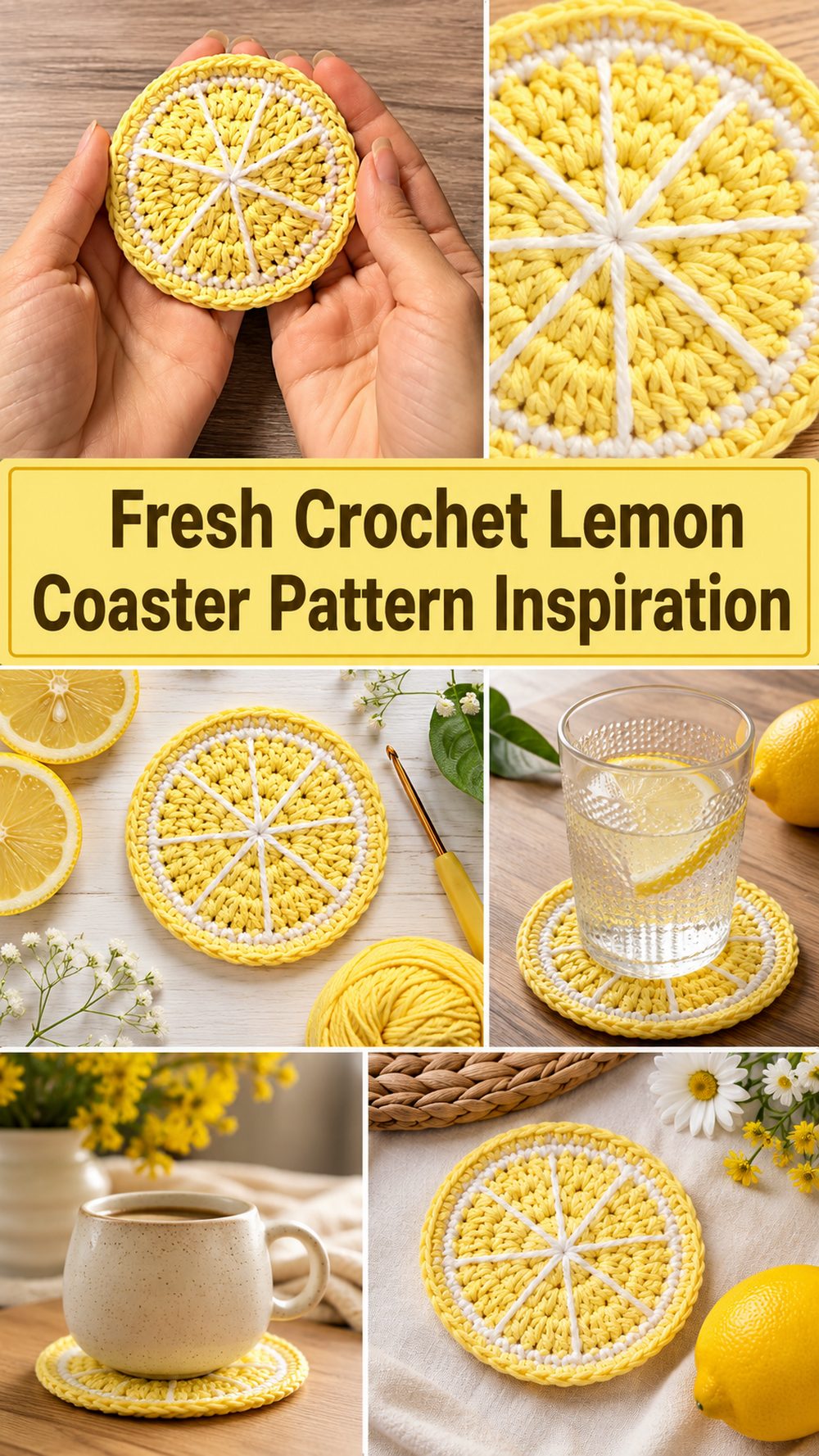
There is something so happy about a lemon crochet coaster. It instantly lifts a table, making it feel fresher, brighter and a little more playful, especially in warm weather. I chose a tutorial which shows how to make a cute lemon coaster, a simple step-by-step summer project, which is a lovely option for anyone who would like a quick decorative make without getting bogged down in anything too complicated. This is the kind of project that works for beginners, weekend crocheters, and anyone who loves small handmade pieces for the kitchen, coffee table or gift basket. The end result is light, fun and seasonal, but still practical enough for everyday use with iced drinks, tea mugs or little display trays.
The Reason You’ll Love This Project
This is a fun project because you get that instantly recognisable lemon-slice look with very little amount of yarn. It is decorative, useful, feels beginner friendly and is easy to make as a set if you fancy matching summer coasters for your home.
Required Materials
Yellow wool
Wool, white
A crochet hook
Scissors
Knitting needle
stitch markers
Measuring tape if you want to keep the same size for coasters
Choose a yarn and hook size to get the fit and texture you want.
Best Yarn for This Pattern
For a lemon coaster, in general, the best choice will be lightweight cotton. Cotton keeps the coaster’s shape nicely, gives clear stitch definition, and handles cups better than slippery or fuzzy yarns. If you want a softer finish then a bamboo blend is also good but for coasters, cotton is especially lovely as it feels crisp and practical. Do not use yarn that is too fluffy as this will hide the details of the lemon slice.
Level of Skill
This is best described as beginner friendly to easy. It is for someone who already knows the basics like chaining, working in the round and joining yarn but is a nice stretch project for a newer crocheter who wants to practice shaping and colour changes in a fun way.
Size & Fit Guide
This is a coaster so the size is very flexible. You can make it a little smaller for cups or a little larger for larger glasses and mugs. The easiest way to adjust this is to keep checking the width as you go along. If it still looks too small, add more rounds evenly. If you want a tidy matching set, measure the first coaster before you make the next so they all come out close in size.
Used Syringes
This coaster is worked as a simple round lemon design in terms of tutorial style and project type, so the clearly involved stitches are basic foundation and round building stitches like chain, slip stitch and single crochet stitches used to build the circular shape and slice details. This tutorial is a step-by-step make rather than an advanced lace or textured design for an easy lemon coaster.
How to prepare it
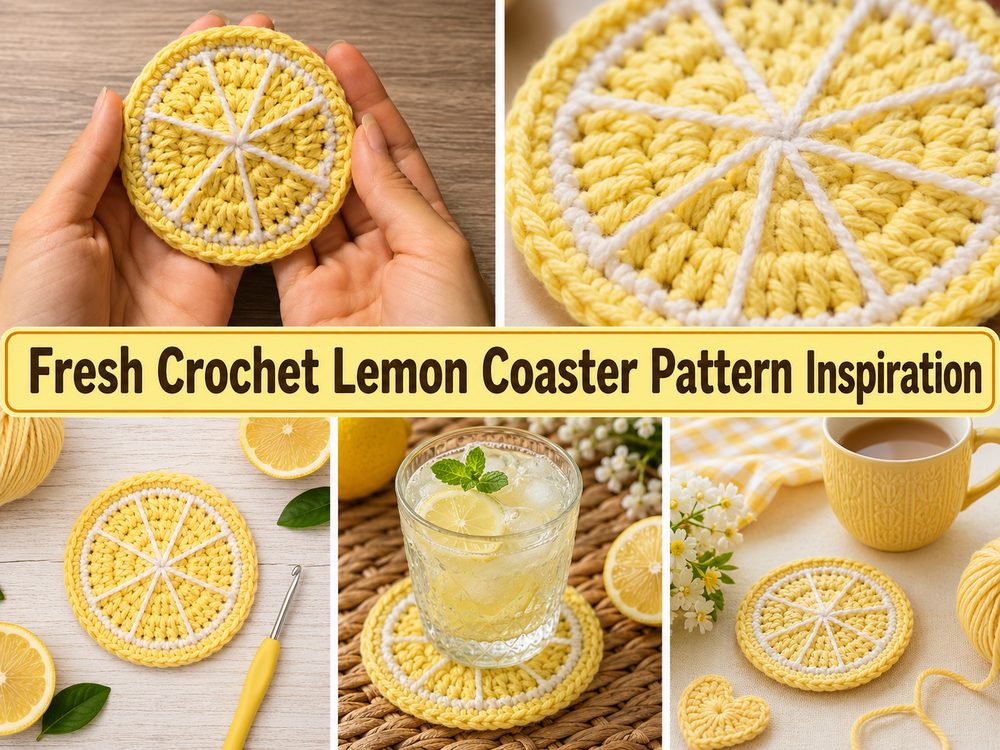
Step 1: Lay the Foundation
Because the coaster starts in the middle, the lemon slice is a clean round shape. Using your yellow yarn, make the center circle. The neatest way to start is with a magic ring as you can pull the middle closed and the coaster won’t have a hole in the center. Alternatively you could use a small loop of chain.
Work your first round into the middle and join neatly so the circle sits flat. This first section is the center of the lemon so keep your stitches even and try not to pull too tight.
Step 2: Construct the Round Center
Once the center is created, add more rounds to widen the circle. The idea here is to not make it big, but to keep it flat and smooth. If your coaster begins to curl, your tension could be too tight, or you could need a few more increases, spaced evenly. If it starts to ruffle you may be adding too many stitches.
This part should still feel easy and repetitive. You’re just making a clean base before you add the details that will make it look like a lemon slice.
Step 3: Make the Lemon Slice Show Up
The cute citrus effect is achieved by dividing the coaster into small wedge-like pieces. Usually in a lemon design, this means adding pale detailing which makes the center look more realistic and juicy. Work these details in carefully so they stay evenly spaced around the circle.
Don’t worry if it doesn’t look perfect halfway through. Often the contrast colours and outer edge come together visually to make these fruit-like coasters. The secret is to keep the sections balanced and the circle flat.
Step 4: Put on the outer round
With the center and segment details in place, work the outer edge of the coaster. This border frames the lemon and gives it a finished appearance. It also makes the coaster feel more solid and useful when used under a drink.
Make this round good and smooth. For a softer look, use relaxed tension. If you want a coaster that holds its shape more firmly, keep your stitches neat and consistent. It’s in this outer section that the lemon design really starts to show.
Step 5. Resize
Before you finish off, put a cup or mug on top and check the size. The coaster should be big enough to be functional but not so big it extends beyond the base of the cup. If you want a bigger slice of lemon, do another round, but keep it flat.
This is also a good point to compare it to any coasters you have already made, especially if you are making a set. Here Size matching is more important than perfect stitch counts.
Step 6. Finishing the Edges
When you are happy with the size, finish the edge neatly and fasten off. Remember to weave in the ends, especially at the colour change spots. Loose ends can be shown quickly if coasters aren’t secured well, because they’re handled and moved around often.
Lay the finished coaster flat and gently form it with your hands. If needed, blocking light can help even out the circle and sharpen the lemon slice look. The final product is bright, round, cheerful and clean enough to be used as a decoration and a functional coaster.
Helpful Hints
For a coaster for everyday use, cotton yarn is the neatest finish.
Keep the tension even, so the circle stays flat.
Put a stitch marker to indicate the start of each round.
Check size with a mug before fastening off.
If you are making a set, count the rounds and compare widths as you go.
A light block at the end helps give a cleaner look to the shape of the lemon.
Common Mistakes to Avoid
Pulling the center too loosely, leaving a gap that can be seen
forgetting to uniformly increase, and make the coaster curl
Too many stitches in the border. Making it wavey
Yarn that is very stretchy and does not hold the citrus shape very well
Memorised building the second coaster and ending up with a different size.
Not weaving the ends together properly at the end, which can make joins of colours look untidy
Customisation Ideas
This project is easy to change to a lime, orange or grapefruit version in different colours. You could add a slightly scalloped edge for a softer decorative look or leave the border plain for a cleaner modern finish. A finer yarn will make a more delicate coaster, and a slightly thicker cotton yarn will make it feel more sturdy. If you want to make a larger trivet, you can use the same design and continue the rounds.
Style advice
These lemon coasters look pretty in a summer kitchen, on a breakfast tray or beside iced drinks on a patio table. They also make cute hand made gifts tied in a small stack with a ribbon. A mixed citrus set can be especially pretty for warm-weather decor, picnic baskets or cheerful hostess gifts.
How to care for
Gently hand wash in cool or lukewarm water with mild soap. Reshape when damp and dry flat. Avoid high heat especially if your yarn blend is delicate. If the coaster gets “floppy” after use, a quick re-block will revive it.
Time Required
This may take a few hours, depending on your speed, yarn, size and stitch pattern.
Conclusion
A crochet lemon coaster is one of those small projects that feels instantly rewarding. It is bright, useful, easy to personalize, and perfect for using up small bits of yarn. You can keep it simple, make a whole citrus set, or adjust the size and color to suit your own style. It is a lovely little make for summer crafting and a fun way to add handmade charm to your home.
FAQs
Is this beginner-friendly?
Yes, it is a good beginner-friendly project, especially if you are comfortable with basic stitches and working in rounds.
What yarn is best for a lemon coaster?
Cotton yarn is usually the best choice because it holds shape well and works nicely for coasters.
Can I adjust the size?
Yes. Just add or reduce rounds as needed, and keep checking the size against your cup or mug.
Can I make it for summer decor?
Absolutely. The lemon design is especially cute for summer tables, picnic setups, and bright kitchen decor.
How do I make it more comfortable and practical to use?
Use a yarn with good absorbency, keep the coaster flat, and make it slightly wider than the base of your cup.
Can I sell the finished item?
In many cases, handmade finished items are sold locally or online, but it is best to avoid copying any exact branded wording and simply sell your own finished handmade version.
How long does it take?
It is a small project, so many crocheters can finish one fairly quickly, though timing depends on your pace and the level of detail you add.