A crochet jar cover can add grip, hide a plain container or turn an empty jar into decorative storage. The safest and most useful choice depends on whether the jar will hold stationery, flowers, wrapped gifts or an enclosed battery light. These ideas compare fitted sleeves, lace covers, handled cozies and character designs. Open flames should not be placed against yarn; where a glowing effect is wanted, use a cool battery-operated light and follow its manufacturer’s directions.
Quick List
- Lacy Crochet Jar Cover for Tealight Holder
- Rustic Jute Crochet Jar Sleeve
- Colorful Granny Square Jar Wrap
- Crochet Jar Cover with Button Closure
- Crochet Jar Cover with Shell Stitch Detail
- Holiday Themed Crochet Jar Cozy
- Ombre Crochet Jar Sleeve
- Crochet Jar Lantern with Beads
- Crochet Jar Cozy with Ruffle Edge
- Personalized Crochet Jar Cover with Initial
Why These Crochet Jar Cover Ideas Are Worth Exploring
A jar cover can hide plain glass, add grip or turn an empty container into decorative storage. The useful difference lies in fit, stitch openness, removable closures and how the jar will be used. Covers placed around lighting should use only suitable cool battery-operated lights; yarn should never sit beside an open flame.
1. Lacy Crochet Jar Cover for Tealight Holder

Lacy Crochet Jar Cover for Tealight Holder uses vertical ribbing fitted closely around a straight-sided jar to create a simple textured sleeve with a firm hand feel. This makes it suitable for desk storage, gift packaging or a covered vase, particularly when the reader wants a design with a clear difference in shape, fit or function. Careful finishing will help the project hold the intended outline instead of looking like a simple variation of another idea.
What Makes This Jar Cover Different
The defining detail is vertical ribbing fitted closely around a straight-sided jar. It controls the shape and gives the project a simple textured sleeve with a firm hand feel. Keeping that feature neat will make the idea easier to recognise and more useful than a basic colour variation.
Best Use for the Finished Jar
This style is strongest when used for desk storage, gift packaging or a covered vase. Match the finished scale, coverage or capacity to that purpose instead of assuming one size will suit every setting.
What to Check Before Using It
measure the jar around its widest point and check stretch before finishing. A very tight sleeve can be difficult to remove for washing. Use the original designer’s construction guidance whenever exact measurements, stitch counts, sizing or attachment details are needed.
2. Lacy Crochet Jar Cover for Tealight Holder

With a fitted body with a small carrying loop or handle, Rustic Jute Crochet Jar Sleeve develops a practical covered container with a handmade basket look. It can work well for lightweight wrapped gifts or stationary storage. The value of this idea comes from its structure and intended purpose, so the most important details should be checked before changing yarn, size, placement or attachment.
What Makes This Jar Cover Different
The defining detail is a fitted body with a small carrying loop or handle. It controls the shape and gives the project a practical covered container with a handmade basket look. Keeping that feature neat will make the idea easier to recognise and more useful than a basic colour variation.
Best Use for the Finished Jar
This style is strongest when used for lightweight wrapped gifts or stationary storage. Match the finished scale, coverage or capacity to that purpose instead of assuming one size will suit every setting.
What to Check Before Using It
reinforce the handle joins and lift only light, non-breakable contents. A crochet handle does not make a glass jar safe to carry when heavy. Use the original designer’s construction guidance whenever exact measurements, stitch counts, sizing or attachment details are needed.
3. Colorful Granny Square Jar Wrap

Colorful Granny Square Jar Wrap focuses on a wider cylinder shaped for broad preserving jars. This gives the finished project a substantial cover with room around a larger opening and separates it from versions that depend only on a colour change. It works especially well for utensil storage, craft supplies or countertop organisation. The design is most useful when the main construction detail remains clear and the finished shape is checked before final assembly.
What Makes This Jar Cover Different
The defining detail is a wider cylinder shaped for broad preserving jars. It controls the shape and gives the project a substantial cover with room around a larger opening. Keeping that feature neat will make the idea easier to recognise and more useful than a basic colour variation.
Best Use for the Finished Jar
This style is strongest when used for utensil storage, craft supplies or countertop organisation. Match the finished scale, coverage or capacity to that purpose instead of assuming one size will suit every setting.
What to Check Before Using It
compare the tutorial’s jar style with your own before adjusting the starting round. A cover designed for one jar profile may bunch on a tapered container. Use the original designer’s construction guidance whenever exact measurements, stitch counts, sizing or attachment details are needed.
4. Crochet Jar Cover with Button Closure

The main appeal of Crochet Jar Cover with Button Closure is raised stitch bands around a fitted sleeve. The result has a cosy surface that hides much of the glass, making it a thoughtful option for dry decorative storage or a gift filled with wrapped items. Rather than adding decoration without purpose, this idea uses its construction to create a recognisable shape and a clearer practical use.
What Makes This Jar Cover Different
The defining detail is raised stitch bands around a fitted sleeve. It controls the shape and gives the project a cosy surface that hides much of the glass. Keeping that feature neat will make the idea easier to recognise and more useful than a basic colour variation.
Best Use for the Finished Jar
This style is strongest when used for dry decorative storage or a gift filled with wrapped items. Match the finished scale, coverage or capacity to that purpose instead of assuming one size will suit every setting.
What to Check Before Using It
keep the base flat so the jar does not rock on the finished cover. Thick texture can trap moisture if placed on a damp jar. Use the original designer’s construction guidance whenever exact measurements, stitch counts, sizing or attachment details are needed.
5. Crochet Jar Cover with Shell Stitch Detail

Crochet Jar Cover with Shell Stitch Detail uses lace spaces arranged around the jar body to create an airy cover that lets glass colour or a battery light show through. This makes it suitable for table decor using cool battery-operated lighting, particularly when the reader wants a design with a clear difference in shape, fit or function. Careful finishing will help the project hold the intended outline instead of looking like a simple variation of another idea.
What Makes This Jar Cover Different
The defining detail is lace spaces arranged around the jar body. It controls the shape and gives the project an airy cover that lets glass colour or a battery light show through. Keeping that feature neat will make the idea easier to recognise and more useful than a basic colour variation.
Best Use for the Finished Jar
This style is strongest when used for table decor using cool battery-operated lighting. Match the finished scale, coverage or capacity to that purpose instead of assuming one size will suit every setting.
What to Check Before Using It
keep yarn, knots and loose ends away from switches and openings. Openwork is decorative and gives little cushioning or grip. Use the original designer’s construction guidance whenever exact measurements, stitch counts, sizing or attachment details are needed.
6. Holiday Themed Crochet Jar Cozy

With basic fitted rounds with a neat upper edge, Holiday Themed Crochet Jar Cozy develops a clean everyday sleeve that is easy to coordinate. It can work well for pencil cups, hook storage or dry bathroom organisation. The value of this idea comes from its structure and intended purpose, so the most important details should be checked before changing yarn, size, placement or attachment.
What Makes This Jar Cover Different
The defining detail is basic fitted rounds with a neat upper edge. It controls the shape and gives the project a clean everyday sleeve that is easy to coordinate. Keeping that feature neat will make the idea easier to recognise and more useful than a basic colour variation.
Best Use for the Finished Jar
This style is strongest when used for pencil cups, hook storage or dry bathroom organisation. Match the finished scale, coverage or capacity to that purpose instead of assuming one size will suit every setting.
What to Check Before Using It
test the jar inside the cover before completing the final edging. A plain cover will show uneven tension more clearly than a busy motif. Use the original designer’s construction guidance whenever exact measurements, stitch counts, sizing or attachment details are needed.
7. Ombre Crochet Jar Sleeve
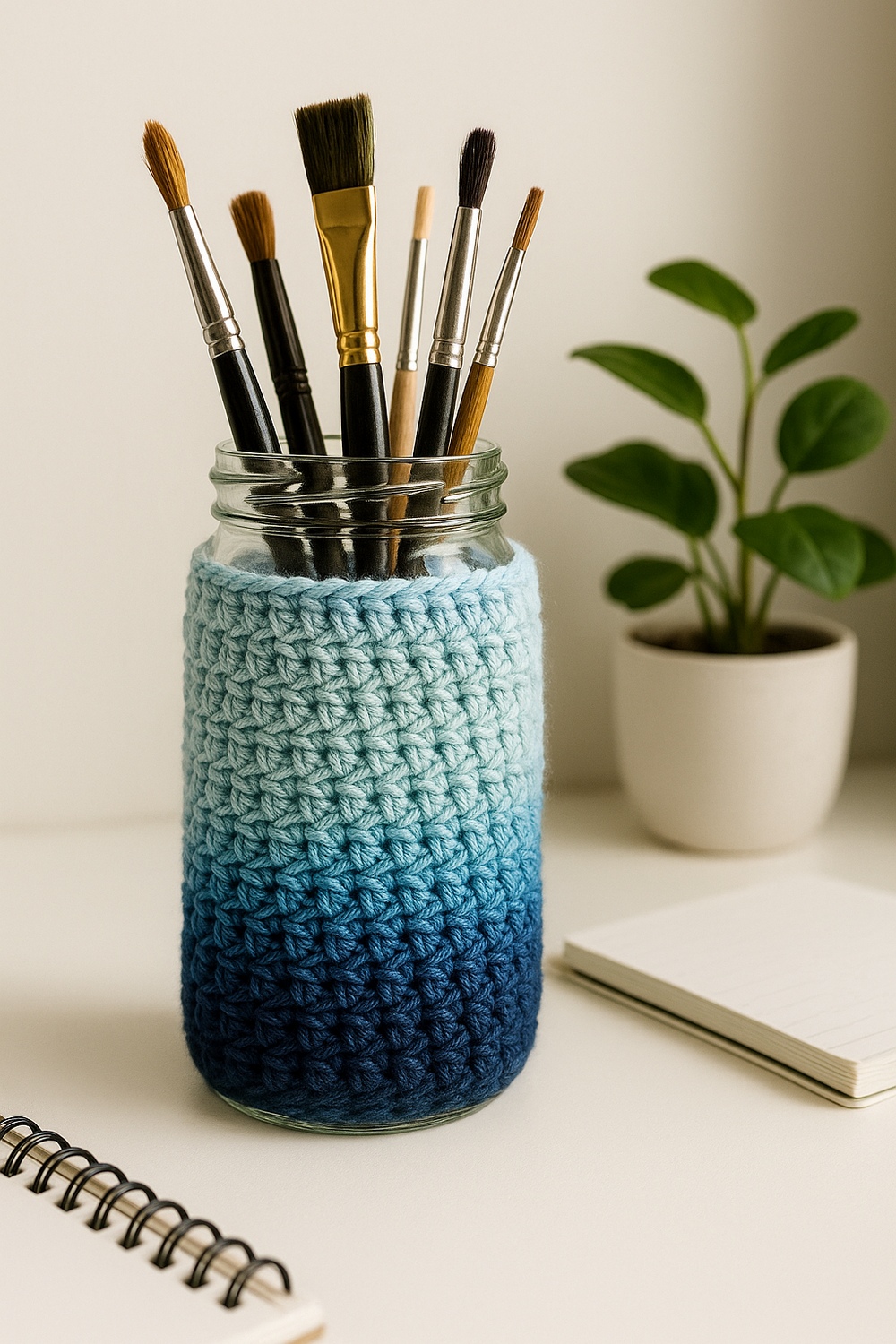
Ombre Crochet Jar Sleeve focuses on crossing open stitches that form a lattice surface. This gives the finished project a decorative net-like layer with visible glass beneath and separates it from versions that depend only on a colour change. It works especially well for flower jars and lightweight seasonal displays. The design is most useful when the main construction detail remains clear and the finished shape is checked before final assembly.
What Makes This Jar Cover Different
The defining detail is crossing open stitches that form a lattice surface. It controls the shape and gives the project a decorative net-like layer with visible glass beneath. Keeping that feature neat will make the idea easier to recognise and more useful than a basic colour variation.
Best Use for the Finished Jar
This style is strongest when used for flower jars and lightweight seasonal displays. Match the finished scale, coverage or capacity to that purpose instead of assuming one size will suit every setting.
What to Check Before Using It
block the cover around a similarly sized container without overstretching it. The open lattice can snag on protruding objects. Use the original designer’s construction guidance whenever exact measurements, stitch counts, sizing or attachment details are needed.
8. Crochet Jar Lantern with Beads

The main appeal of Crochet Jar Lantern with Beads is fine open lace with a decorative upper finish. The result has a delicate occasion-ready cover, making it a thoughtful option for wedding tables or celebration decor with battery lights. Rather than adding decoration without purpose, this idea uses its construction to create a recognisable shape and a clearer practical use.
What Makes This Jar Cover Different
The defining detail is fine open lace with a decorative upper finish. It controls the shape and gives the project a delicate occasion-ready cover. Keeping that feature neat will make the idea easier to recognise and more useful than a basic colour variation.
Best Use for the Finished Jar
This style is strongest when used for wedding tables or celebration decor with battery lights. Match the finished scale, coverage or capacity to that purpose instead of assuming one size will suit every setting.
What to Check Before Using It
choose a jar with smooth edges and keep the lace evenly tensioned. Fine thread takes longer to finish and may show every tension change. Use the original designer’s construction guidance whenever exact measurements, stitch counts, sizing or attachment details are needed.
9. Crochet Jar Cozy with Ruffle Edge

Crochet Jar Cozy with Ruffle Edge uses an open sleeve designed to create patterned light to create a soft glowing effect through repeated spaces. This makes it suitable for shelves and tables using only an appropriate battery-operated light, particularly when the reader wants a design with a clear difference in shape, fit or function. Careful finishing will help the project hold the intended outline instead of looking like a simple variation of another idea.
What Makes This Jar Cover Different
The defining detail is an open sleeve designed to create patterned light. It controls the shape and gives the project a soft glowing effect through repeated spaces. Keeping that feature neat will make the idea easier to recognise and more useful than a basic colour variation.
Best Use for the Finished Jar
This style is strongest when used for shelves and tables using only an appropriate battery-operated light. Match the finished scale, coverage or capacity to that purpose instead of assuming one size will suit every setting.
What to Check Before Using It
confirm that the light remains cool and stable inside the jar. Yarn is combustible, so this style is not suitable against an open flame. Use the original designer’s construction guidance whenever exact measurements, stitch counts, sizing or attachment details are needed.
10. Personalized Crochet Jar Cover with Initial

With character features added to a fitted jar body, Personalized Crochet Jar Cover with Initial develops a playful covered container with ears and facial detail. It can work well for children’s-room organisation placed out of reach, party decor or gifting. The value of this idea comes from its structure and intended purpose, so the most important details should be checked before changing yarn, size, placement or attachment.
What Makes This Jar Cover Different
The defining detail is character features added to a fitted jar body. It controls the shape and gives the project a playful covered container with ears and facial detail. Keeping that feature neat will make the idea easier to recognise and more useful than a basic colour variation.
Best Use for the Finished Jar
This style is strongest when used for children’s-room organisation placed out of reach, party decor or gifting. Match the finished scale, coverage or capacity to that purpose instead of assuming one size will suit every setting.
What to Check Before Using It
secure embellishments carefully and use the jar only for dry storage. Small sewn or glued details are not suitable for unsupervised play. Use the original designer’s construction guidance whenever exact measurements, stitch counts, sizing or attachment details are needed.