
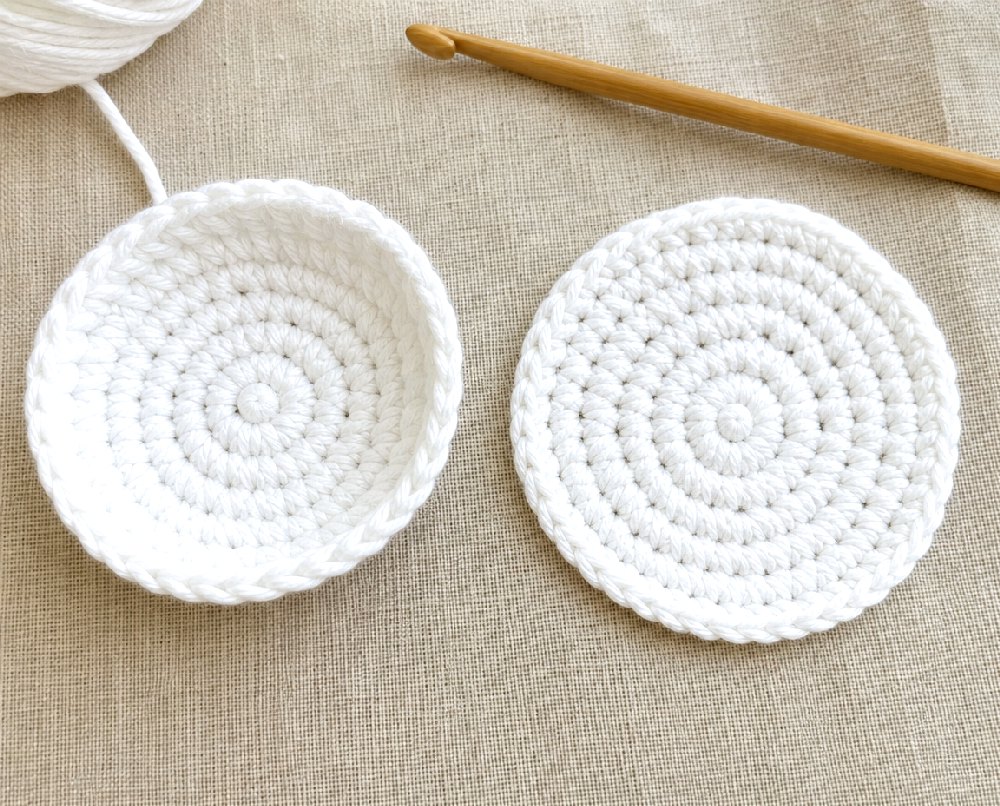
A flat Crochet circle should lay flat on a table without cupping up or creating deep waves. The edges start to rise and the centre to sink, and the circle starts to look more like a bowl than a flat piece.
This is usually because the circle is not growing big enough, your tension is too tight or the hook is too small for the yarn. The right fix will depend on when curling started and how bad it is.
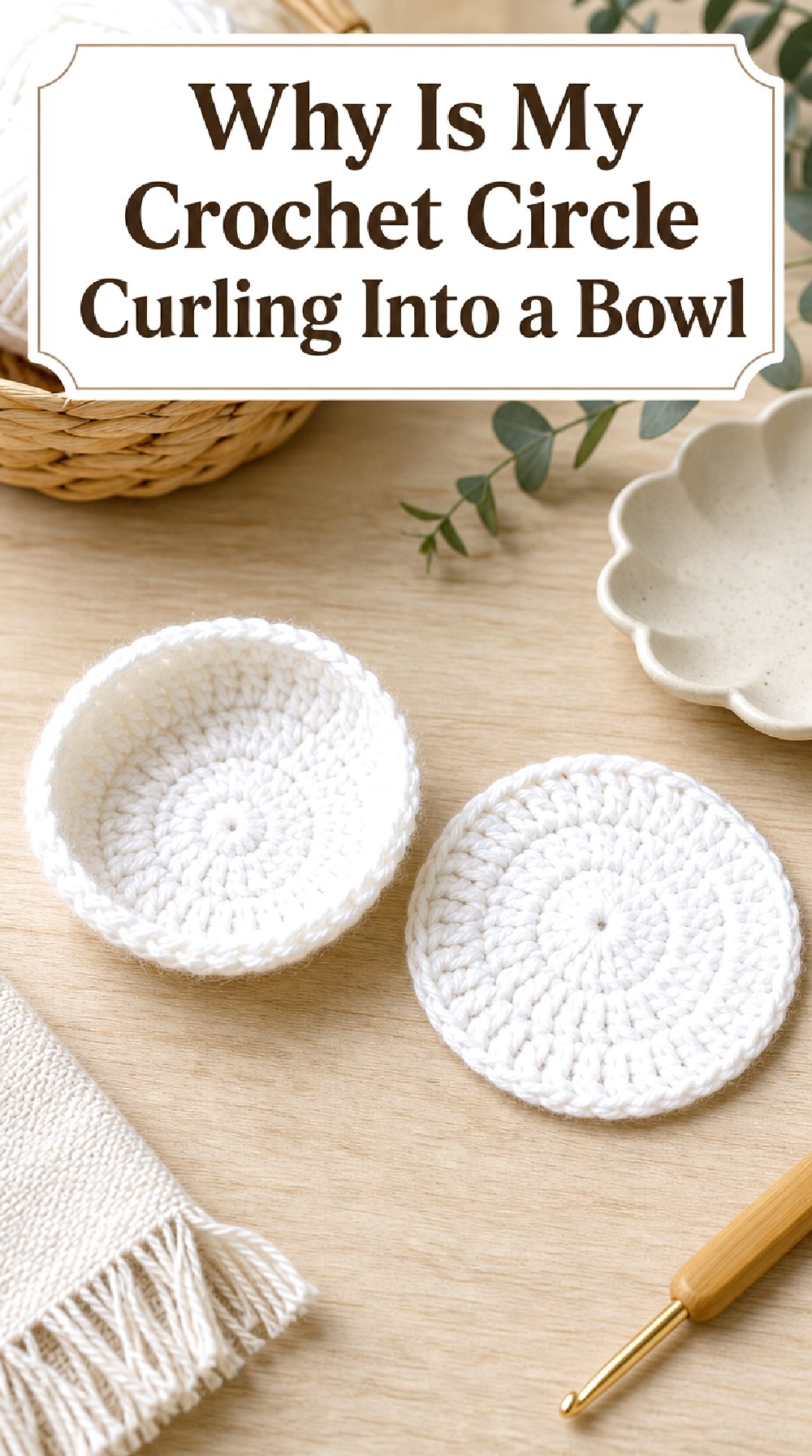
What the Problem Looks Like
Signs of a crochet circle turning into a bowl can be:
- The outer rim is lifted off the table.
- The edge is blind but the middle sees.
- With each round the circle gets rounder.
- The stitches feel dense/tight.
- It is smaller than I thought it would be.
It is sometimes normal to have a little curling in the first few rounds. If the cupping is strong and continues as the circle expands, the fabric usually requires more space.
1. Not Enough Raise
A flat circle has to be periodically enlarged to get wider. There are not enough stitches, and they are squeezed around a circumference that is too small on each round. The fabric is gathered to make a bowl.
For simple circles worked with even spaced increases, the number of stitches is increased by the same amount every round. For instance, a double crochet circle might start out with 12 stitches and increase by 12 stitches each round thereafter.
But the beginning counts vary from yarn, stitch and pattern. Always follow the instructions in the pattern first.
How to Repair
Count your stitches at the end of each round. Compare your total to how many the pattern calls for.
If the count is too low, search for:
- missed increments
- Skipped stitchs
- 2 stitches crocheted together in error
- An unworked stitch close to the joining slip stitch
- A turning chain that had been miscounted
If this round is only a small error, carefully redo the round and put the missing increases in the correct places.
2. Your Tension Is Too Great
The tighter the tension, the narrower and shorter the stitch. Even if the stitch count is correct, the round may not be flexible enough to spread flat.
You might struggle to get the hook in, the fabric feels stiff or the circle springs back into a curve when you press it down.
How to Repair
Ease up on the hook and yarn. Allow the yarn loop to rest on the widest part of the hook before completing each stitch.
Make a small test circle with the same yarn and pattern. Knit one stitch in your normal tension, and one stitch more loosely.
Don’t stretch each finished stitch by pulling on it. Try to make relaxed, even stitches when crocheting.
3. Hook is too small
Smaller hook makes a tighter, denser fabric. This can cause a flat circle to cup, particularly if you use firm yarn or stitches like single crochet.
If your stitch count is right and the circle still feels stiff and is smaller than the size given for the pattern, you probably have a hook size problem.
How to Repair
Try crocheting a new sample using a hook one size larger. Compare the diameters, flexibility and shape of both circles.
A hook size change results in a gauge change. If you are working on a fitted project stop and measure your new sample before continuing. Some cups may be intentional for baskets or structured items. Usually the fabric should be flat for coasters, motifs, flat bases and rugs.
4. The Start Round Is Too Narrow
A very tight magic ring or starting chain can pull in the centre. The first few rounds then curve round the constricted centre.
This will often result in a small bump or a deep dip in the centre, even if the later rounds are the correct number of stitches.
How to Repair
Loosen the starting ring a little and weave in the yarn tail. The center should close flat, without tightening the stitches around it.
If you used a chain ring, make sure the chain wasn’t made too tight. Start with a bigger hook for the chain, then go back to the regular hook for the stitches.
The worst centre distortion is usually the easiest to fix by restarting .
5. Vary the Rate of Increases for Your Yarn or Stitch Pattern
Standard increase formulas are helpful, but they don’t work perfectly for every yarn, stitch or crocheter. Further increases may be needed for thicker yarn, tighter stitches and textured stitch patterns.
A circle can also stay flat for a few rounds and only start cupping when it gets bigger.
How to Repair
Add a small number of evenly spaced increases to the next round. Avoid placing several extra stitches in one area because this can create a point or bulge.
Start with one extra increase in several evenly spaced sections. Lay the work flat frequently and stop adding extra stitches when the cupping disappears.
Keep notes so you can repeat the adjusted stitch counts on matching pieces.
How to Prevent the Problem
- Count the stitches at the end of every round.
- Mark the first stitch with a stitch marker.
- Check whether the chain counts as a stitch.
- Spread the circle on a flat surface after each round.
- Measure the diameter regularly.
- Make a small gauge sample before starting a large circle.
Can Blocking Fix It?
Blocking can improve mild curling caused by tension or yarn memory. Wet blocking works well for many natural fibres. Acrylic yarn may respond to gentle steam, but excessive heat can melt or flatten synthetic fibres.
Pin the damp circle to blocking mats at the correct size and allow it to dry completely.
Blocking cannot replace missing increases or correct a seriously wrong stitch count. A strongly cupped circle may temporarily look flatter after blocking but often returns to its curved shape.
Can It Be Fixed Without Frogging?
Mild cupping may improve if you add a few evenly spaced increases in the next round. This works best when the problem has only just started.
You may also change to a slightly larger hook for later rounds, although the difference in stitch size can be visible.
If the circle has been curling for several rounds, adding many stitches suddenly can produce waves. In that case, undoing the affected rounds usually gives a cleaner result.
When to Rotate the Rows?
Frog, or undo, the rounds when:
- Several increases are missing.
- The circle is deeply bowl-shaped.
- The centre is extremely tight.
- The stitch count has been wrong for multiple rounds.
- Adding extra stitches would create an uneven edge.
Place a stitch marker in the last correct round before removing the hook. Undo only as far as necessary.
Quick Troubleshooting Guide
The edge lifts slightly: Check tension and try blocking before undoing rows.
The circle forms a deep bowl: Count the stitches and look for missing increases.
The centre is raised or pinched: Loosen or remake the starting ring.
The fabric is stiff and small: Use a larger hook or relax your tension.
The circle starts cupping after several flat rounds: Add a few evenly spaced increases.
Frequently Asked Questions
Will my crochet circle flatten as it gets bigger?
A slight curve may relax after another round, but continuing cupping usually needs correction.
How many increases does a flat circle need?
It depends on the stitch, yarn and pattern. Follow the pattern’s stitch counts and increase instructions.
Why is my circle curling even though the stitch count is correct?
Your tension may be too tight, the hook may be too small, or the yarn may need a slightly different increase rate.
Can I iron a crochet circle flat?
Direct ironing can damage yarn and flatten stitch texture. Use suitable wet blocking or carefully controlled steam instead.
Why does my crochet circle have waves instead of cupping?
Waves usually mean there are too many increases, the hook is too large, or the tension is too loose.
Can a border hide a bowl-shaped circle?
A border may smooth a slightly uneven edge, but it cannot correct a strongly cupped circle or missing increases.
Final Thoughts
A crochet circle usually curls into a bowl because it has too few increases, tight tension, a small hook or a restricted centre. Begin by checking the stitch count, because missing increases are the most common cause.
Correct small problems as soon as they appear. Frequent counting, stitch markers and regular shape checks will help each round remain flat and even.