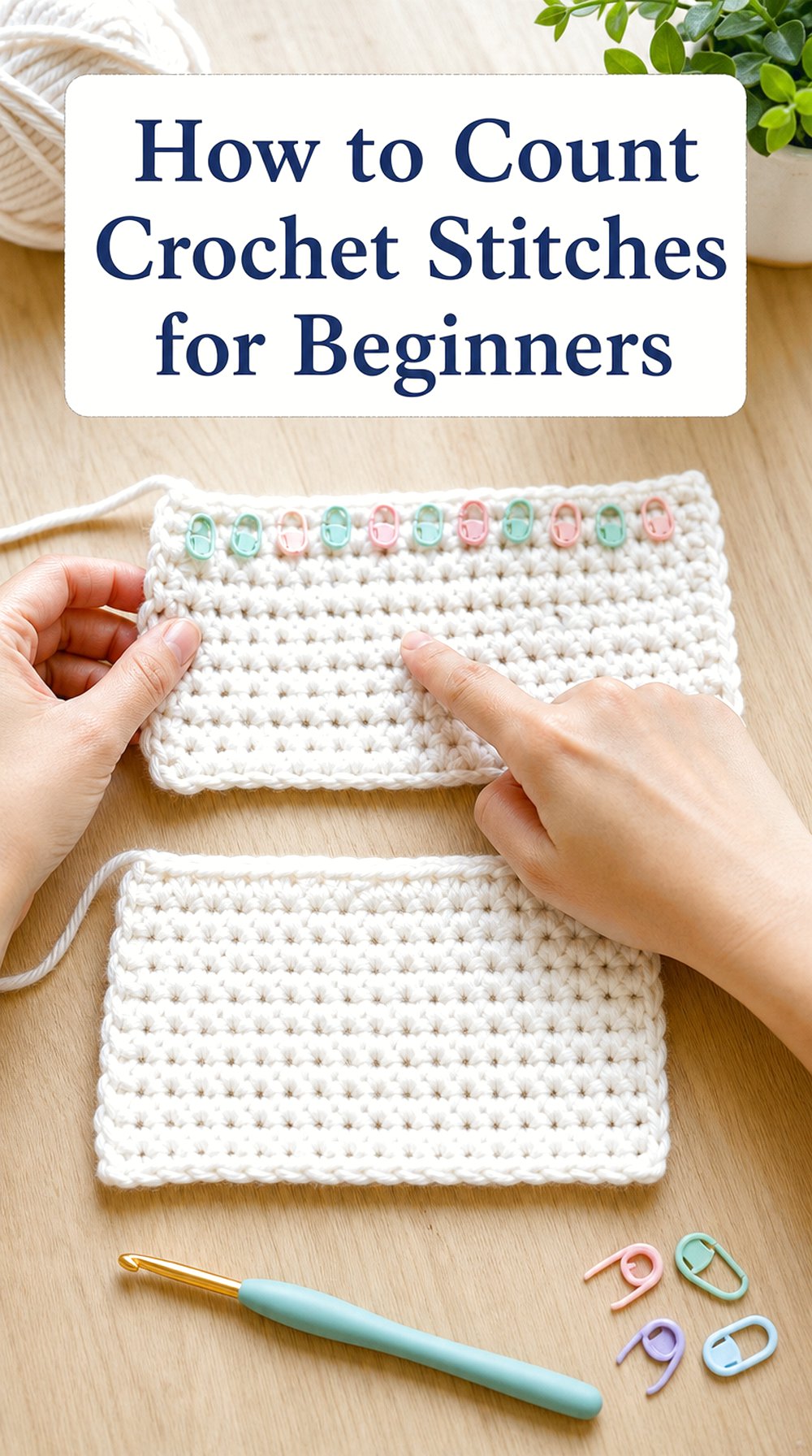
One of the most important Crochet skills for beginners is counting stitches. A correct stitch count keeps your work straight, helps shapes form properly, and prevents unexpected widening or narrowing.
The big problem is what loops are stitches , where is the first and last stitch , does the turning chain count . This guide will teach you how to properly identify, count and mark stitches.
What Proper Stitch Counting Looks Like
Typically a row counted correctly has:
- Same number of stitches as pattern calls for
- Straight sides, unless shaping is included
- Row of clearly formed stitch tops
- No gaps, bulges or missing edge stitches unexplained
- Increases and decreases only as directed
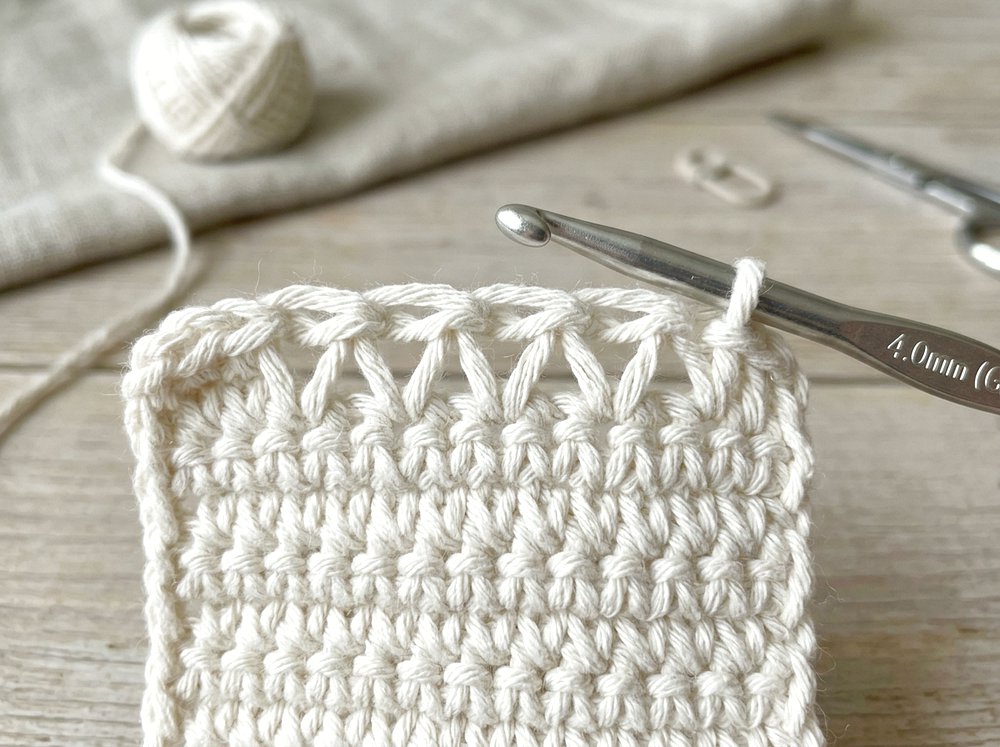
Look at the top of your work. Most crochet stitches make a little “V”. A full V usually represents one stitch.
Don’t count the loop on your hook now. It is a working loop, not a finished stitch.
1. Learn to Locate the Top of a Stitch
The easiest place to count crochet stitches is at the top edge of the row. Each stitch has two top loops forming a V, as a rule.
Lay your work flat with the top edge towards you. Count each V across the row starting at one end. Hook the stitches with your finger, hook tip or a yarn needle, but do not pull them apart.
Vertical posts also appear on taller stitches, such as the double crochet. You can count the top Vs or the posts, but usually the top Vs are more reliable to count.
How To Fix It?
Count from one end to the other, slowly. Count the stitches and touch every one.
If you are doing a long row, put a stitch marker in every 10 or 20 stitches. Count each group separately, then add the groups.
If the top loops are difficult to see, stretch the fabric sideways gently. Don’t pull so tight you distort the stitches.
2. Turning Chain Check Count
A turning chain on the first row of a new row is made to bring the hook up to the correct height . It might count as the first stitch or it might just give height depending on the pattern and stitch.
This is one of the most common reasons why beginners count too many or too few stitches.
Count the turning chain as a stitch and include it in the row total. Usually you will work it in at the end of the next row.
Don’t count it if it doesn’t count and put the first stitch in the first available stitch.
How To Fix It?
Carefully read the pattern notes. Look for language such as:
- “Chain 3 counts as a dc
- “Turn chain does not count as stitch”
If the pattern doesn’t make sense, look at the row instructions and the total of stitches expected. The placement of the first and last stitches often gives an indication of how the turning chain is being treated.
Ensure consistency throughout the project.
3. Mark First and Last Stitch
If the edge stitches lean, tighten or merge into the turning chain they can be easy to miss. Missing the last stitch makes the work narrower. If you accidentally work into the turning chain and the first stitch it can widen.
How To Fix It?
After the first stitch of the row, put a locking stitch marker through the top loops of that stitch. When you get back to that edge, the marker will tell you exactly where to put the last stitch.
Move marker into first stitch of each new row.
Mark the first and last stitch to make it easier. This is especially helpful for dark, fuzzy or textured yarns, but the same method works well on any beginner project.
4. Count your stitches at the end of each row
A little mistake can turn into a big shaping problem if you check the count several rows late.
For example, a scarf that should have 25 stitches can gradually taper if you keep forgetting the last stitch again and again. Or it can be made wider by adding more stitches along the sides.
How To Fix It?
Count, then turn. Stop at the end of each row. Now compare your total to the pattern.
If the count is wrong, please check the row before going on. Search for:
- Knitted two stitches together
- Skipped stitch
- A lost edge stitch
- An accidental stitch in the turning chain
- An increase or decrease in the wrong place
It’s much easier to fix one row than several rows down.
5. Know the Increases and Decreases
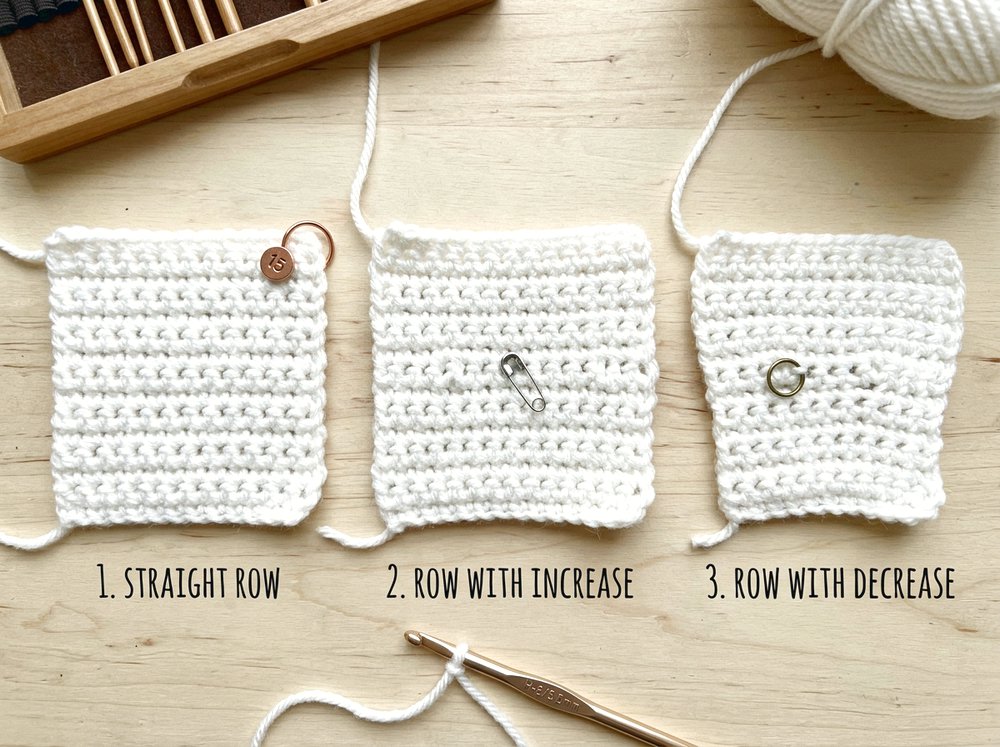
Some stitch counts are meant to change. An increase adds stitches, a decrease joins stitches together reducing the total.
For example, two single crochet stitches worked into one stitch is an increase of one stitch. Single Crochet 2 Together (sc2tog) – Decrease by 1 stitch total. 2 stitches into 1 stitch.
How To Fix It?
At the end of the pattern row check your stitch count. Count the rises or falls as you make them.
Mark shaping points with marker stitches. This also stops you from accidentally adding or subtracting stitches where you shouldn’t.
when the pattern has shaping do not make every row have the same count
6. Count Stitch Groups Within Pattern Repeats
Many patterns use repeated groups like shells, clusters or sets of three stitches. You may not get the actual stitch total by looking only at the visible groups.
Even though a double crochet shell of five stitches looks like one fan-shaped unit, it is still five stitches.
How To Fix It?
See if the pattern stitch count is for individual stitches, chain spaces, or pattern repeats.
Count each finished stitch unless the pattern instructs you to count groups. Make it easier to check long rows by marking the end of each repeat.
Remember that chain stitches in a row can be counted as stitches or spaces, depending on the pattern.
How to Avoid Counting Errors
- Read through pattern notes before starting.
- Knit a small practice swatch to find the tops of the stitches.
- Begin each row with the first stitch.
- Count at the end of each row or round.
- Use markers to break long rows into smaller groups.
- Keep track of completed rows with a row counter or notebook.
Is Wrong Stitch Count Fixable By Blocking?
Blocking can make slight imperfections disappear and improve the shape of well-made fabric. It can’t replace missing stitches, remove extra stitches, or fix wrong increases or decreases.
If the stitch count is off and the sides are visibly changing shape, fix the stitches, don’t count on blocking.
Can a Crocheted Border Conceal It?
A border can tidy up a little uneven edge. Maybe a slight edge wobble or some tension difference is easier to conceal.
Repeated counting errors have led to a project becoming much wider, narrower, or uneven and a border cannot fix this properly. You can get ripples or a tight edge if you put a border on badly shaped fabric.
Is it fixable without frogging?
Sometimes a single missing stitch can be fixed in the next row with an increase but this will make a visible change in the fabric. A decrease sometimes can make up for an extra stitch.
This is best for small mistakes on plain fabric where precise shaping is not important. For fitted garments, lace, colorwork or structured pieces, it’s usually better to fix the original row.
When Is It Time to Undo the Rows?
When undo rows:
- The pattern shape is obviously wrong
- Skipped or additional stitches
- No increase or decrease is in effect
- The error is regarding a clothing size
- The next part of the pattern depends on an exact count
Crochet undone is often referred to as “frogging.” Pull the yarn slowly, stopping at the last row to the right.
Quick Trouble Shooting Guide
“The row is getting thinner. You might be missing the first or last stitch.
The row is getting wider: You may be working into the turning chain and the first stitch.
One stitch too many: Check the edge stitches and if the turning chain counts.
The count changes in one area. Look for an accidental increase, decrease or missed stitch.
The count is correct but the edge looks uneven. The problem may be tension rather than stitch placement.
FAQ
Is the loop on the hook counted as a stitch?
No. The loop on the hook is the working loop and does not count as a stitch worked.
Are chain stitches a crochet stitch?
Foundation chains are counted singly. Depending on the pattern, chains and chains within a row may or may not count.
Do I count the slip knot?
No. The slip knot and the loop on the hook are not counted as a chain stitch.
How do I count stitches in a round??
Count each V along the top edge and mark the first stitch. Move the marker to the beginning of each round.
Do I count both loops in the V?
No. The two loops join together to make the top of one stitch. Count the entire V as a single stitch.
Why is my stitch count correct but my crochet is still uneven?
Your tension might be moving. Make sure you are tightening some stitches more than others and that you are using the same hook all the time.
Concluding Comments
The easiest way to count crochet stitches is to find each V on the top edge, mark the first stitch and check the count after each row. Always check to see if the turning chain counts before you decide that you are wrong about your stitch count.
Counting regularly will prevent most problems of widening and narrowing. Fixing a mistake earlier means it will usually be faster to fix and the final product will be tidier.