Useful Crochet projects earn their place by solving small everyday problems while still offering room for colour and texture. This collection brings together five practical makes: a roomy market bag, a floor basket, a buttoned mug cozy, a textured dishcloth, and a water bottle holder. Each Crochet idea serves a different part of daily life, from shopping and storage to kitchen cleaning and hands-free carrying.
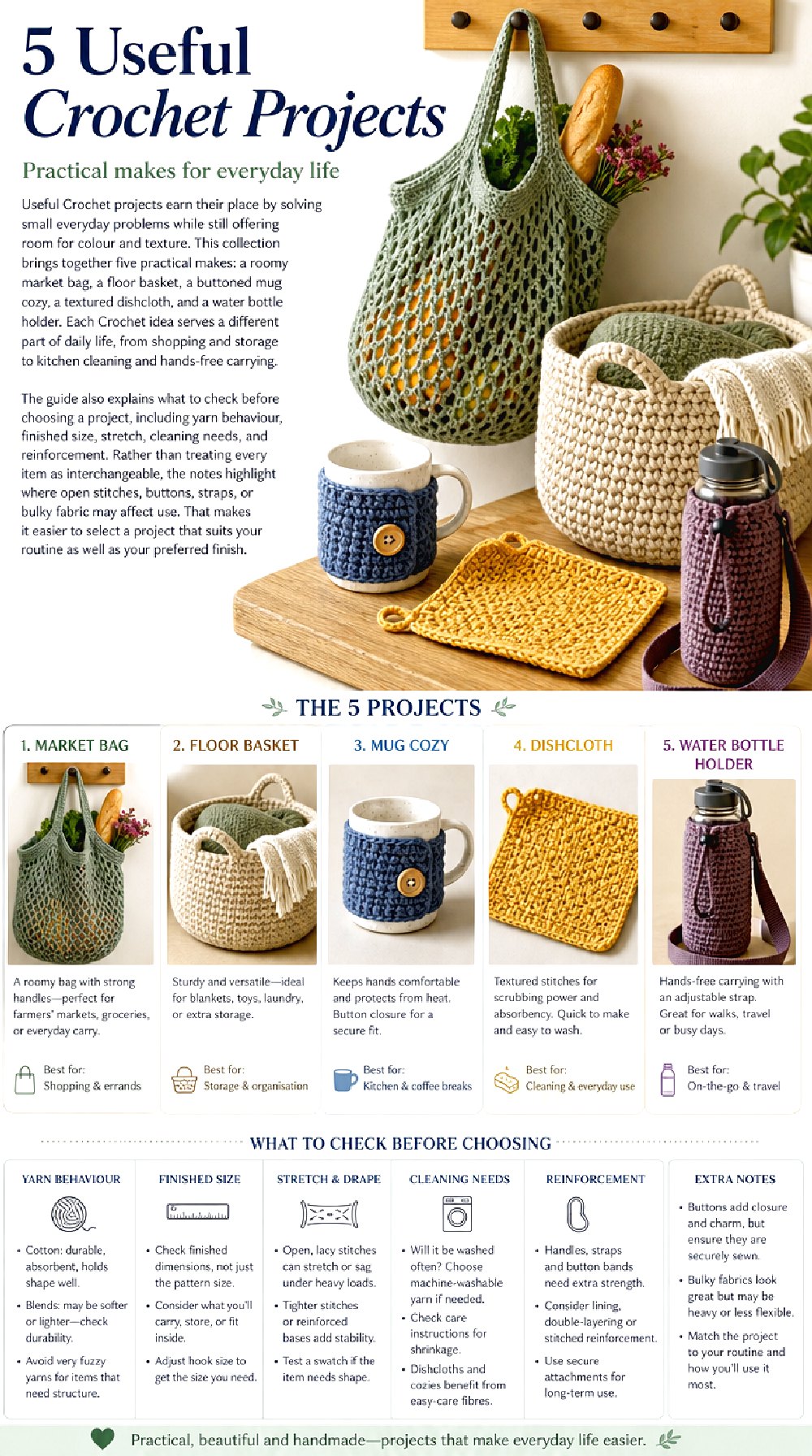
The guide also explains what to check before choosing a project, including yarn behaviour, finished size, stretch, cleaning needs, and reinforcement. Rather than treating every item as interchangeable, the notes highlight where open stitches, buttons, straps, or bulky fabric may affect use. That makes it easier to select a project that suits your routine as well as your preferred finish.
Quick List
- Crochet Mesh Market Bag
- Crochet Chunky Floor Basket
- Crochet Buttoned Mug Cozy
- Crochet Textured Dishcloth
- Crochet Water Bottle Holder
How to Choose Useful Crochet Projects for Everyday Use
Start with the job the finished item needs to do. Bags and bottle holders carry weight, so their bases, seams, and straps deserve more attention than decorative texture alone. Storage baskets need enough structure to remain upright, while dishcloths and mug cozies benefit from fibres that suit regular handling and cleaning.
Next, compare the finished size with the object or space involved. Measure a favourite mug, bottle, shelf, or floor area before beginning, because even small changes in yarn weight or tension can alter the result. Open mesh is useful for a foldable market bag, but tiny contents may slip through. Dense fabric offers more containment, though it can become heavier.
Finally, plan care before choosing colours or embellishments. Pale kitchen items may show stains quickly, buttons should be sewn securely, and long straps can stretch once loaded. Check the yarn label, make a small swatch when fit matters, and reinforce high-stress joins rather than relying on appearance alone.
1. Crochet Mesh Market Bag
Design Details
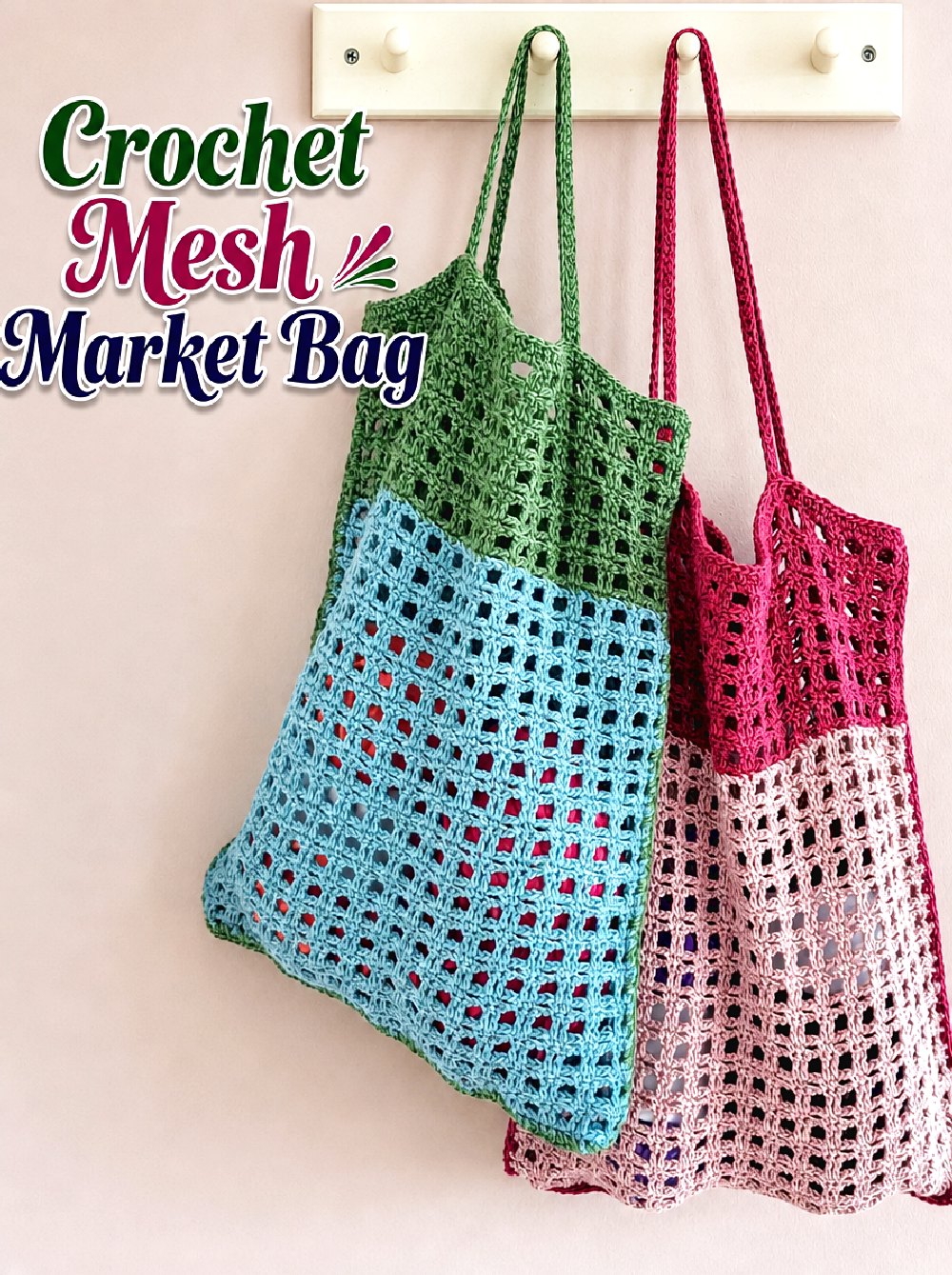
This Crochet market bag uses two rectangular mesh panels joined around three sides, with a pair of handles attached along the top edge. The repeated open spaces keep the bag visually light and allow it to fold down when not in use, while the denser edging gives the opening a clearer outline.
Best Use
It can suit produce shopping, beach essentials, or other larger items that will not slip through the mesh. A cotton or cotton-blend yarn may give the bag a firmer feel, but the finished size and stretch will still depend on yarn weight and tension.
Practical Point
The open fabric is less suitable for keys, pens, or small loose groceries. Add a removable fabric pouch for tiny contents, and check the handle joins regularly if the bag carries heavier loads.
2. Crochet Chunky Floor Basket
What Stands Out
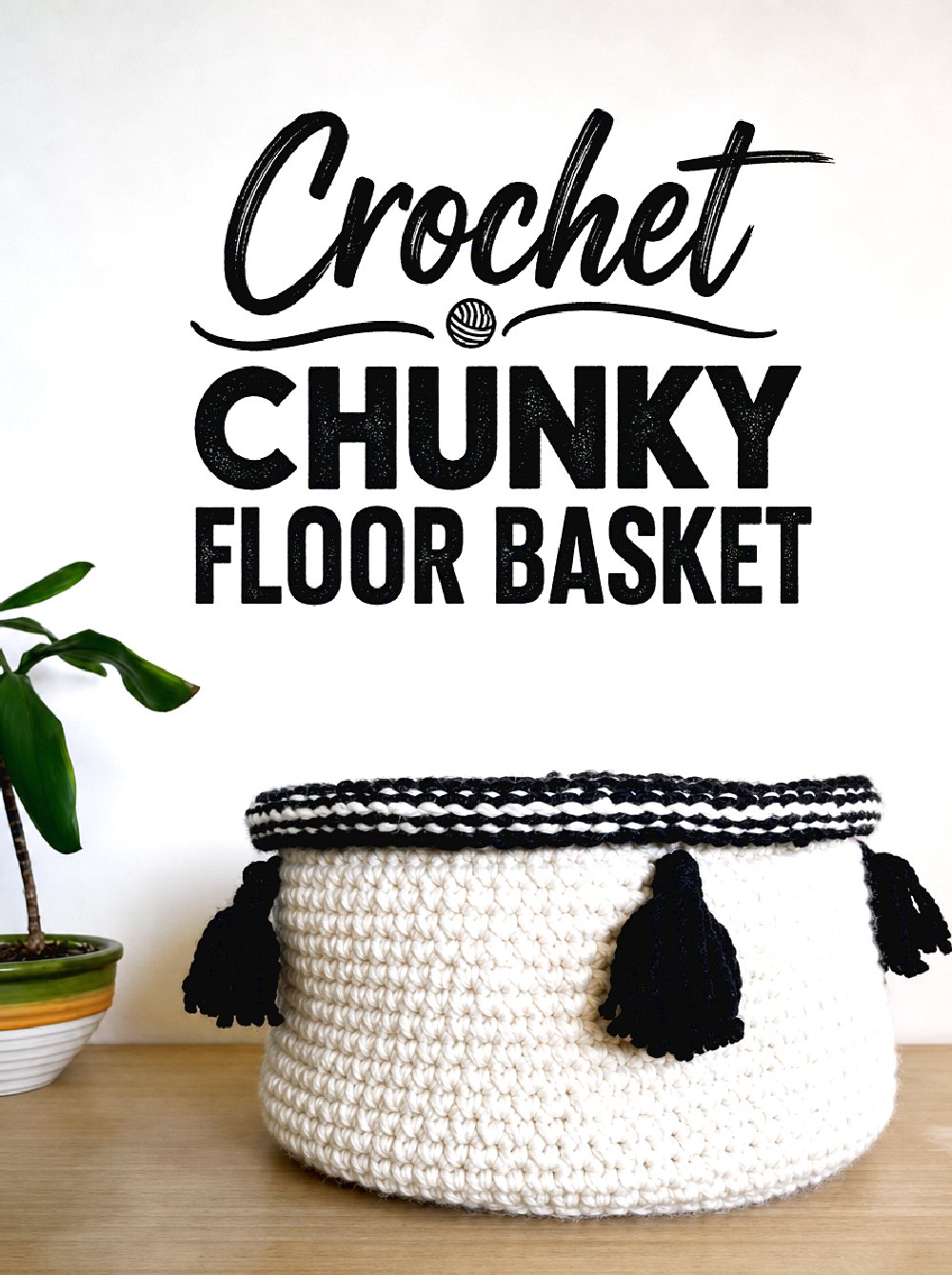
The Maja-style Crochet basket is a large floor design worked in chunky fabric, with a contrasting slip-stitch band near the top that creates a herringbone-like effect. It can be displayed tall or with the upper section rolled down, giving the same basket two different proportions.
Everyday Use
Its scale suits blankets, magazines, toys, or yarn beside a sofa or in a craft area. A restrained two-colour palette keeps the patterned band visible without making the basket compete with the room.
Before You Choose
Basket shape depends heavily on tension. The main body needs firmness, while the decorative upper section is intentionally looser; working that band too tightly may encourage curling or pull the sides inward. Store lightweight items first until the basket has settled into shape, and reshape it by hand after cleaning or long storage.
3. Crochet Buttoned Mug Cozy
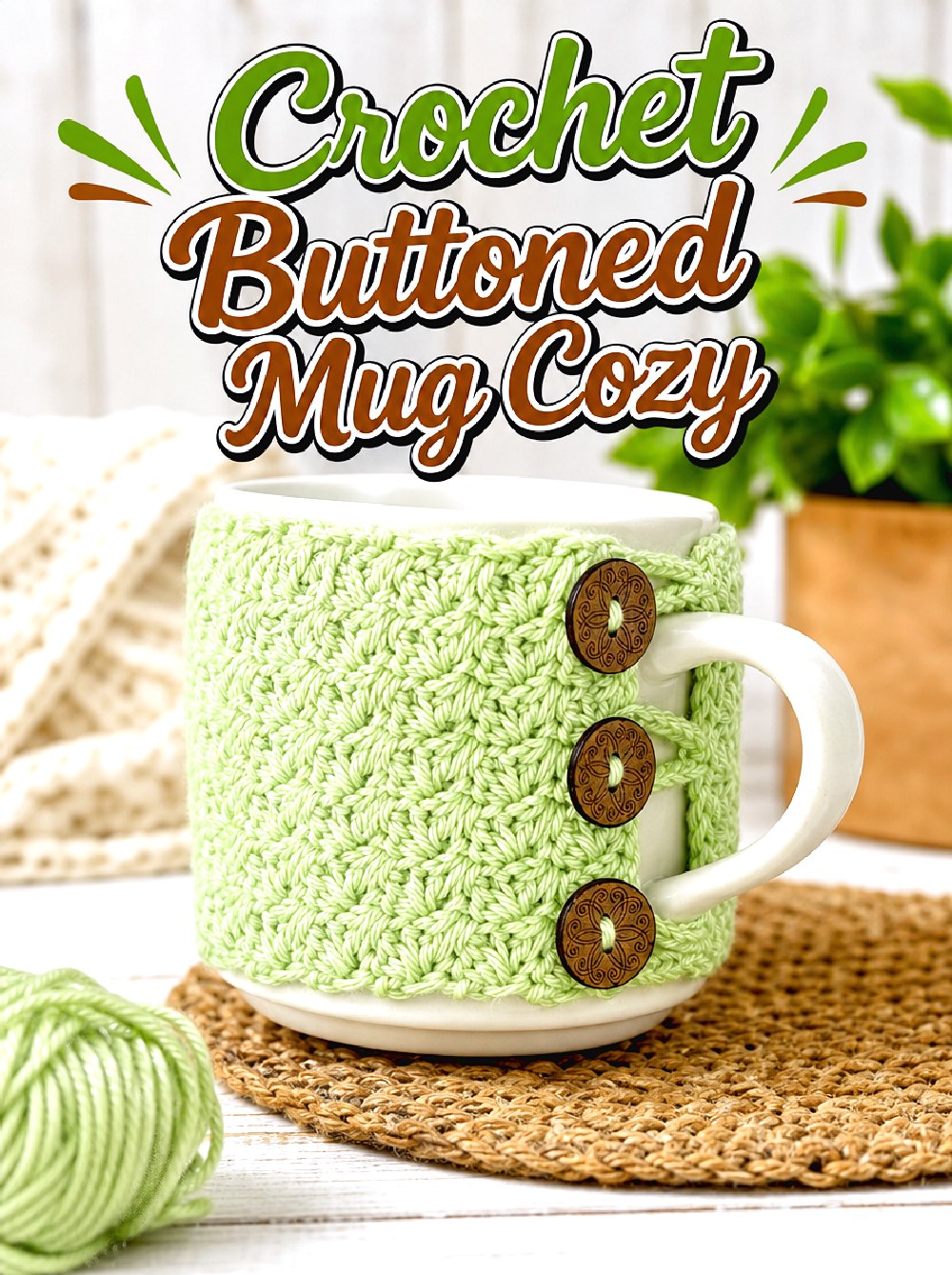
Construction Focus
This Crochet mug cozy is worked flat in rows using a reversible Suzette-stitch texture. Button loops are formed at one end, then three buttons are sewn to the opposite side, so the wrap can be opened rather than stretched over the mug.
Fit and Finish
The adjustable row count makes it practical for matching a specific mug circumference. Before fastening off, wrap the piece around the mug and confirm that the handle remains accessible and the cozy sits snugly without buckling. Cotton can be a sensible choice for a washable, shape-conscious finish.
Good to Know
Buttons add character but also create small raised points that may feel awkward near the hand. Sew them securely and keep the cozy away from very hot surfaces or open flames. It is a decorative grip layer, not a substitute for safe handling of a hot mug.
Crochet Textured Dishcloth
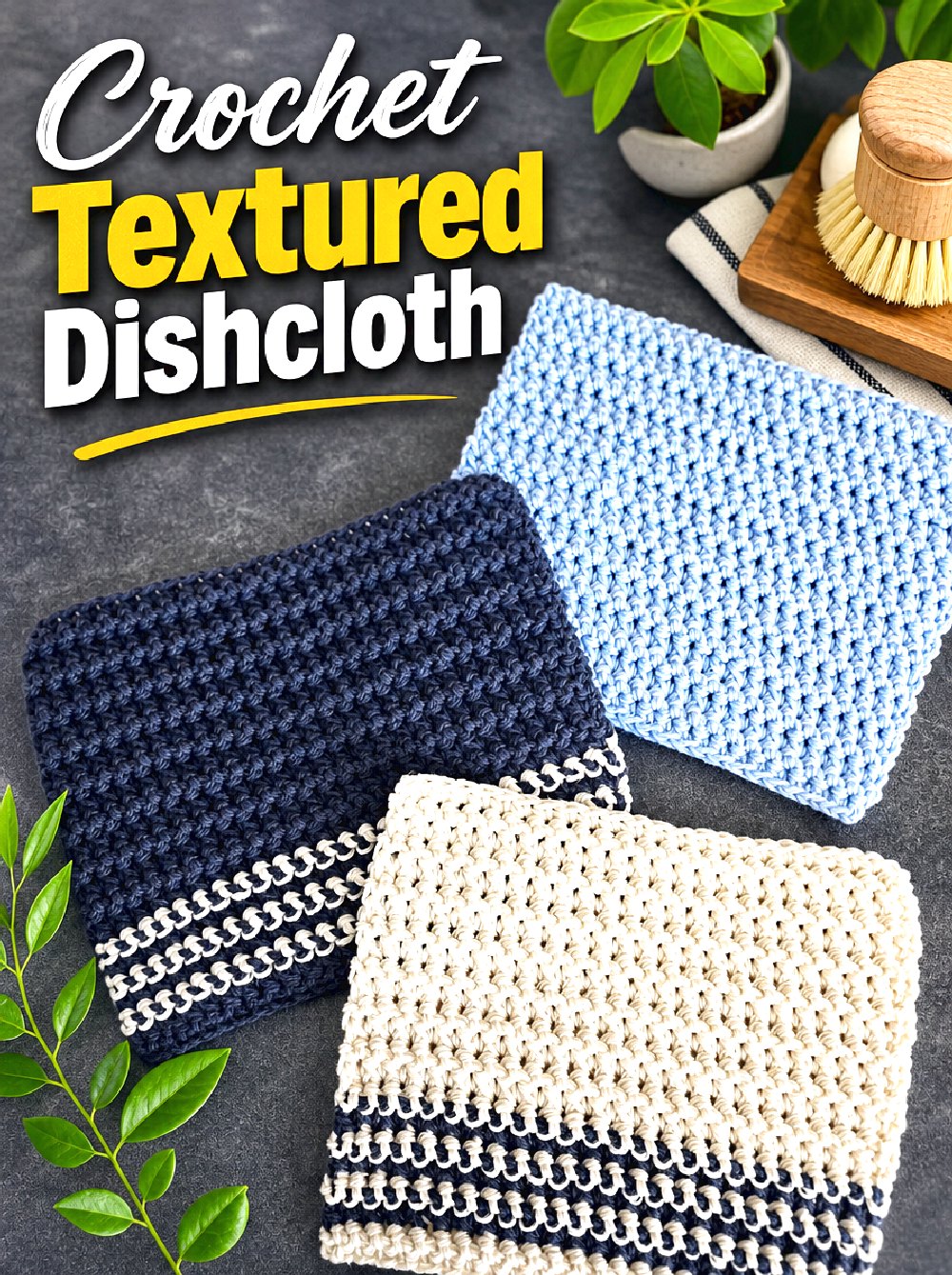
Design Details
The Easy Crochet Dishcloth is worked back and forth in rows, using a textured double-stitch fabric with contrasting colour changes near one edge. The result is a compact rectangular cloth with a simple border and enough visual variation to create coordinated kitchen sets.
Why It Works
Because the width and height can be adjusted, this project can suit smaller sink cloths or broader cleaning squares. Choose colours that make sense for regular use: mid-tones tend to disguise staining better than bright white, while a contrast stripe can help separate cloths used for different tasks.
Care Note
A dishcloth needs to dry fully between uses. Dense stitching may hold moisture longer, so avoid making the fabric excessively tight and hang or spread it after washing. Check the yarn care label, and reserve the cloth for cleaning rather than direct contact with high heat.
Crochet Water Bottle Holder
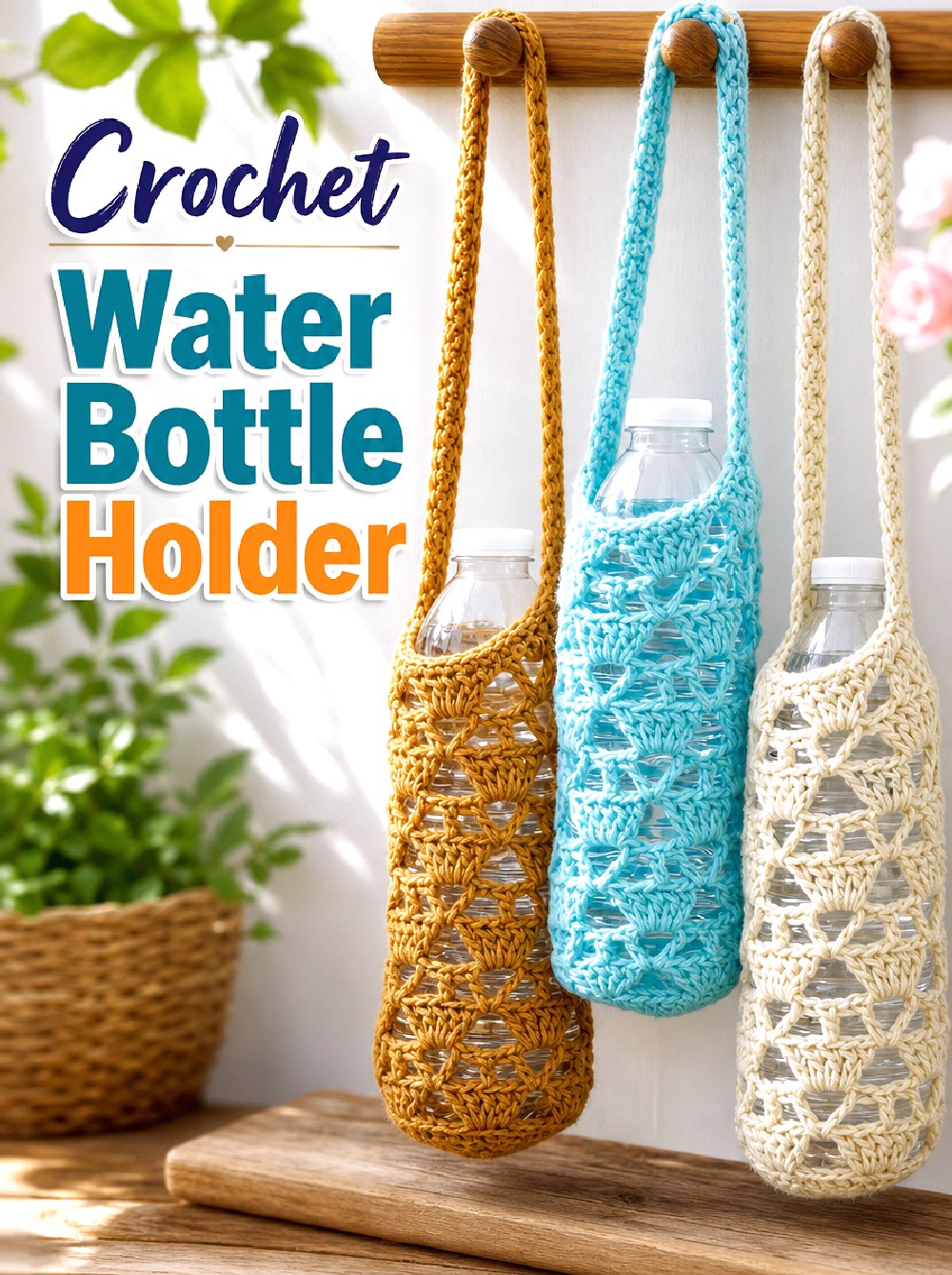
What Stands Out
This Crochet water bottle holder begins with a solid round base, then changes to an open shell-and-V-stitch body. A separate strap is sewn to the holder, creating a hands-free carrier with enough openness to show the bottle and reduce unnecessary bulk.
Who It Suits
It can be useful for walks, festivals, or outings where a bottle needs to stay accessible. The body length can be extended for a taller bottle, but the base should match the bottle diameter closely so the container does not tilt or slide.
Practical Point
The source notes that the strap stretches under the weight of water, making pre-use fitting important. Test the loaded holder at home before wearing it outside, shorten the strap when necessary, and reinforce both attachment points with secure stitching. Avoid carrying glass bottles, particularly around children or crowded areas.
Useful Crochet Notes
Check the Real Object First
A practical project should be tested with the real object it will hold or cover. Measure the mug, bottle, shelf, or intended contents before starting, then compare those measurements during construction. Yarn substitutions can change width, height, and stretch even when the same instructions are followed.
Test Straps Before Finishing
Handles and straps often lengthen after loading. Before finishing, place a similar weight inside the bag or holder and let it hang briefly. This reveals whether the strap needs shortening or the attachment needs reinforcement. Dense stitches at stress points usually matter more than decorative edging.
Plan the Cleaning Routine
Match the fibre to the cleaning routine rather than choosing by colour alone. Kitchen cloths and drink accessories are likely to need frequent washing, while large baskets may be spot-cleaned and reshaped. Always follow the yarn label, secure buttons firmly, and dry items completely before storage.
Conclusion
Choose the project by the problem you most want to solve. The dishcloth and mug cozy offer compact makes with straightforward sizing checks, while the market bag and bottle holder require closer attention to stretch and reinforcement. The floor basket suits readers who want a larger home project with visible texture. Whichever style stands out, measuring first and planning for cleaning will make the finished Crochet item more useful.
FAQs
What yarn works well for useful Crochet projects?
Cotton is often useful for bags, cloths, and drink accessories because it can create a defined fabric, but it is not the only option. Compare the yarn label, expected washing routine, weight, and stretch. A soft yarn may feel pleasant yet lack the structure needed for a loaded holder or upright basket.
How can I check the finished size while crocheting?
Measure the object first, then check the Crochet piece during construction rather than waiting until the end. Wrap a mug cozy around the mug, place the bottle on the base, or compare a basket with its intended space. This catches sizing problems before edging, buttons, or straps are added.
Should a Crochet market bag have a lining?
A lining is useful when the bag will carry small objects that could pass through open stitches. It can also limit stretching, but it makes the bag less foldable and adds sewing work. A removable pouch is a simpler alternative for keys, coins, or other loose items.
Where should Crochet bags and holders be reinforced?
Reinforcement helps where weight concentrates: handle ends, strap joins, basket bases, and bag seams. Use secure repeated stitching without creating a hard lump, weave in ends thoroughly, and test the item with a modest load. Stop using it if the yarn frays or the joins begin to loosen.
How should useful Crochet items be cleaned and stored?
Follow the yarn manufacturer’s care instructions and remove detachable contents before washing. Dry flat or reshape when the item’s form matters, especially for baskets and fitted cozies. Dishcloths should dry completely between uses, while bags and holders should be checked for stretched seams before being stored.