
If the yarn is pulled too tight the crochet tension is too tight and the stitches will be small and stiff and hard to work. You may have difficulty getting the hook in, your hands may ache, and your project may turn out smaller than the pattern says.
Beginners often have tight tension, especially when they are concentrating on how to hold the yarn and hook correctly. This guide gives you the lowdown on how to find the cause, loosen your stitches and avoid the problem in future projects.
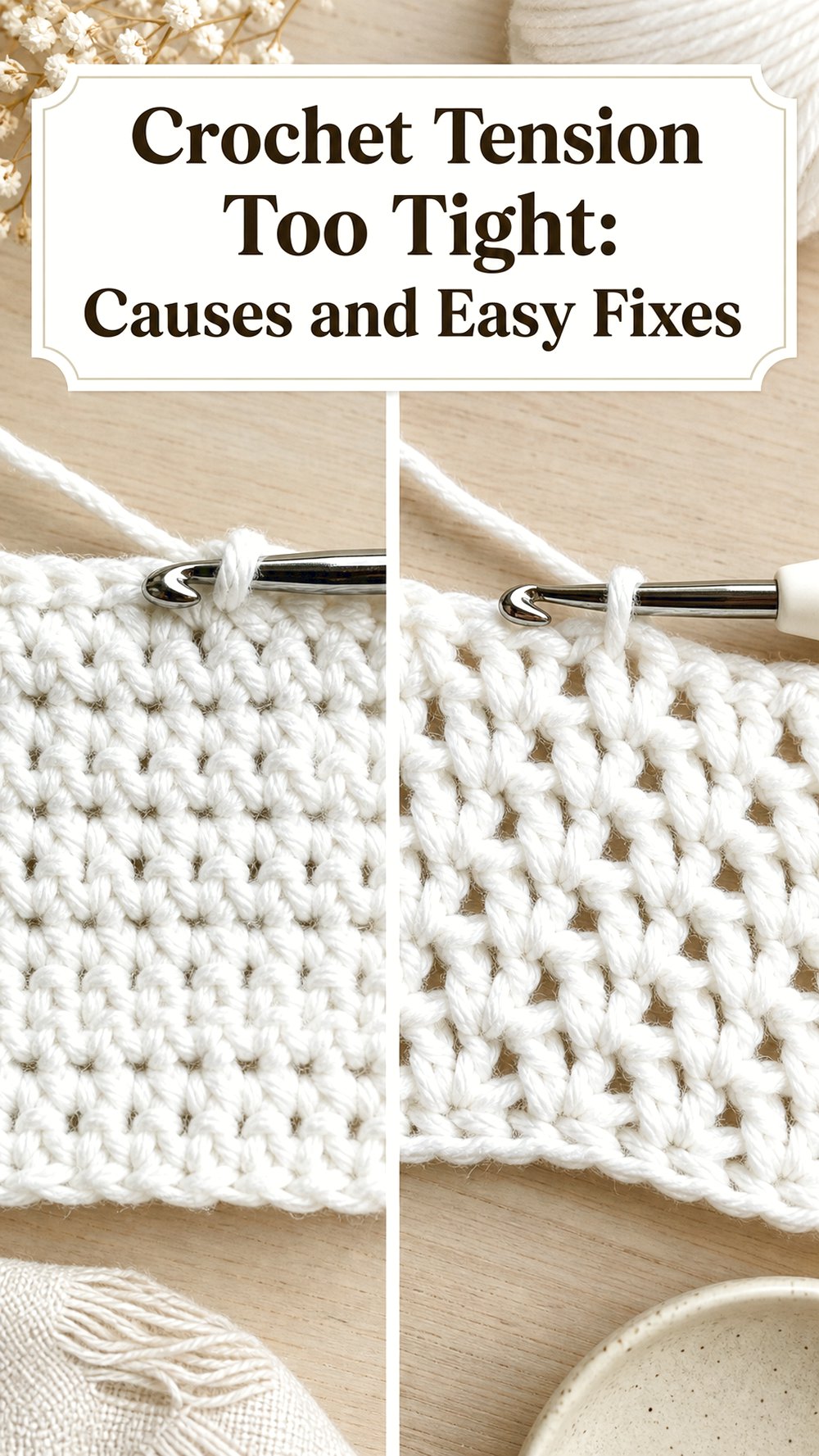
This is what tight crochet tension looks like.
Signs could include:
- The hook is hard to get into the stitches.
- Stitches appear unusually small or compressed.
- The fabric is not flexible, it is stiff.
- Your project is smaller or narrower than expected.
- The starting chain is stiff or coiled.
- Your hands, fingers or wrists tire easily.
- The yarn squeaks or rubs against the hook.
- You have a hard time getting loops through other loops
Compare your work to the pattern gauge. If you have more stitches per inch than the pattern calls for, your tension is likely too tight.
1. When the working yarn is pulled too tight
Some crocheters pull the working yarn after each stitch to make the loop look neat. This eliminates the little bit of room the hook needs to move freely.
The loop on the hook should be on the widest part of the hook shaft. If it is pulled tight over the narrow part of the hook the finished stitch will be too small.
How To Fix It?
Don’t pull the yarn tight after every stitch. Make the stitch and then carefully slide the loop onto the shaft of the hook before continuing on to the next step.
Try doing a short row slowly. After every yarn over, check that the loop can move along the hook, yet not fall off or get caught too tight.
Try leaving a little slack between your hand of yarn and the hook. Regulate the yarn, do not stretch it;
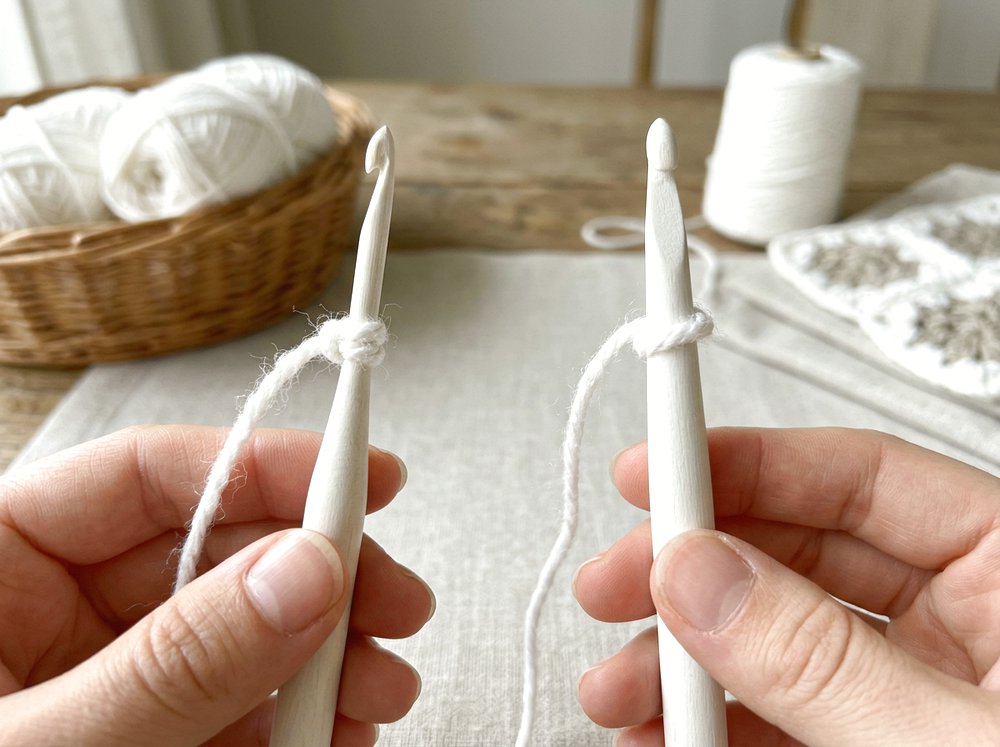
2. Tying Your Yarn Too Tight
You can get good control by wrapping the yarn around several fingers, but if you wrap too many times you may get too much resistance. And you might be squeezing the yarn with your fingers without knowing it.
This often causes uneven flow, hand fatigue and stitches that tighten the more you crochet.
How To Fix It?
Yarn hold simplification. Try running the yarn over one finger and under another, instead of wrapping it around several times.
Relax your yarn hand and let the yarn slip through your fingers. Gently pull the hook away from the ball of yarn to test the hold. The yarn should run through easily, without forcing.
Every few rows, pause and shake your hands. Reset your grip if your fingers are curled tightly or your knuckles feel tense.
3. Gripping the Crochet Hook Too Tightly
A firm grip on the hook will often create tight stitches. It may also cause pain in the thumb, wrist or forearm.
Just enough pressure to lead the hook in. You can hold it like a pen or knife, even, but the grip should be light.
How To Fix It?
Slide your fingers a little further away from the head of the hook. This can take away the need to control every little movement.
Keep your shoulders down, wrist straight. Crochet several stitches. Deliberately make your thumb and index finger loose.
Take breaks regularly. If you have persistent pain, tingling or numbness, stop and rest instead of pushing through the pain.
4. Too small hook
Smaller hooks make smaller loops and a denser fabric. it can be handy for some projects, but it can make an already tight crocheter, tighter.
Begin by checking the yarn label and the pattern recommendation. The right hook is the one that gives you the gauge and the feel of the fabric that you need.
How To Fix It?
Make a gauge swatch with the suggested hook. Count the stitches and rows in the area shown in the pattern.
If you have too many stitches per inch, use a hook one size larger and make another swatch. Keep tweaking until your gauge is close to the pattern.
Most often, adjusting the hook size is a more dependable solution than attempting to crochet unnaturally loosely for an entire project.
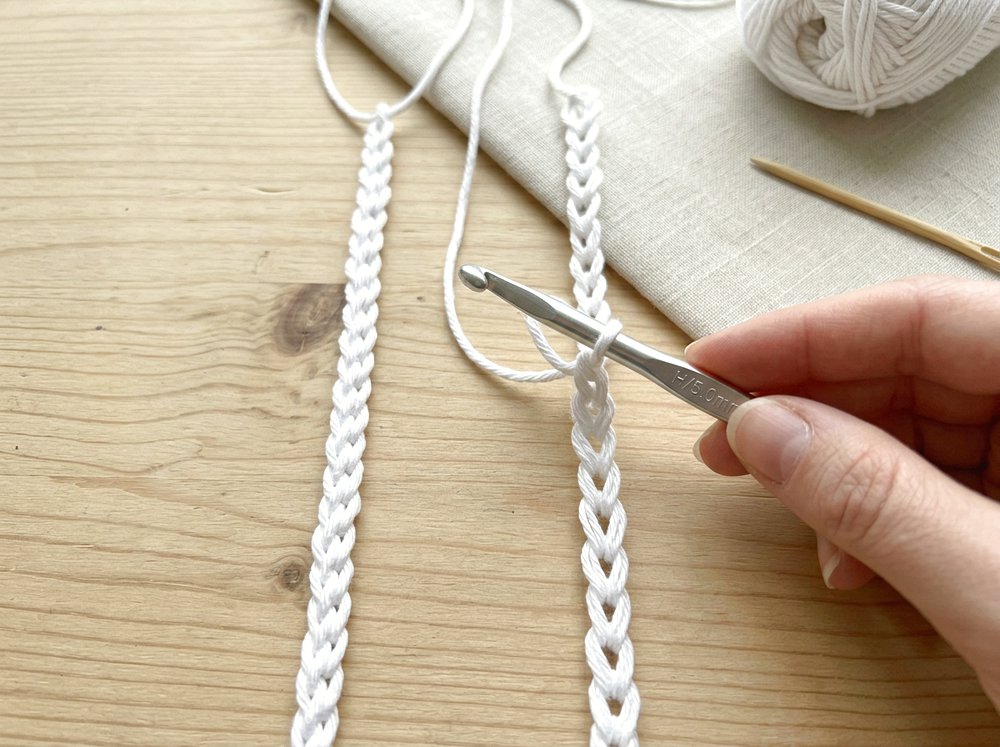
5. Over-Tightening the Starting Chain
A foundation chain that is too tight can pull in the bottom edge, curl, or make the first row hard to do. Even if you are a good tension crocheter, you may be crocheting your chains too tight.
How To Fix It?
For the starting chain, use a hook one size larger, then go back to your main hook for the first row.
Create a chain. Then, before creating the following chain, leave the chain loop on the hook shaft. Do not pull the completed chain taut.
If the pattern allows it you can also use a foundation stitch such as foundation single crochet or foundation double crochet. These methods build the chain and the first row together and often result in a more flexible edge.
6. Stress, Speed or Inconsistent Rhythm
Tension may tighten when you are learning a new stitch, rushing to finish or feeling stressed. Some crocheters begin with relaxed stitches and gradually tighten them as a row continues.
How To Fix It?
Slow down until the stitch sequence feels familiar. Focus on making smooth movements rather than pulling each stitch into place.
Place a stitch marker every 10 or 20 stitches and compare the fabric between markers. This can help you notice where the tension changes.
Measure your project regularly. Catching a width change after a few rows is easier to correct than discovering it near the end.
How to Prevent Tight Crochet Tension
- Before you start a fitted or size-sensitive project, make a gauge swatch.
- Leave the loops on the hook shank, do not tighten them on the throat.
- Select a simple yarn hold with smooth feeding.
- Regularly check your hand, wrist and shoulder position.
- As you work, measure the project again after the first few rows.
- If your stitch count per inch is too high, use a larger hook.
Can Blocking Correct Tight Tension?
Blocking can soften the fabric, improve the drape and correct small differences in measurements. Some natural fibers may react more noticeably than some synthetic fibers.
But blocking can’t completely save fabric that is way too small, very stiff or worked in the wrong gauge. Avoid high temperatures, especially on synthetic yarns, as it can permanently damage or flatten the fibres.
Should You Change Hook Size?
If your stitches are always too tight, the simplest fix is often to go up a hook size. Increase one hook size, make a different swatch, and measure again.
Never change hook size in the middle of a project unless you are fixing an intentional shaping issue. An abrupt change can cause a noticeable difference in stitch size and fabric width.
Is it fixable without frogging?
Slightly tight fabric may be improved with careful blocking. A flexible border can sometimes make up for a tight starting edge, but the border cannot take up severe pulling or replace missing width.
If the project is considerably smaller than it should be, stiff or painful to continue, the best option is usually to undo the rows. Frogging means undoing stitches you’ve already made so you can redo them.
Quick Trouble Shooting Guide
The hook will not go into the stitch: Loosen each loop and do not pull the previous stitch tight.
Too small a project: check gauge and use a larger hook.
The bottom edge pulls in: Make the first chain less tight or use a larger hook for the chain.
Fabric too stiff: Increase hook size, decrease yarn hand pressure.
Row to row tension builds: Rest and change your grip now and then.
FAQ
Is Crochet Tension Too Tight?
Not always. Dense fabric helps with some items, but you still want a tension that lets the hook move comfortably to match the pattern gauge.
How much bigger should my hook be?
Start by going up one hook size. Create a new swatch before deciding if you need to make another adjustment.
Why is my crochet getting tighter as I go?
Hand fatigue, stress and gripping the yarn more tightly can cause your stitches to gradually tighten up. Stop now and then to check your grip.
Would another hook material help?
Yup. A sticky or fuzzy yarn may benefit from a smoother hook to reduce drag, while a slick yarn may be easier to control with a less slippery hook.
Does closer tension use less yarn?
It might use less yarn, but the finished fabric will be smaller and denser at the same stitch count. Always follow Gauge for size sensitive projects.
Should I make myself crochet loosely?
No. If you’re trying to hold some weirdly overstated loose tension, then stop. Use a comfortable grip and adjust your hook size.
Concluding Comments
Crochet tension that is too tight is usually caused by pulling the yarn, holding the hook too tightly, making small loops or using a hook that is too small. Most cases are solved by a larger hook, relaxed hand position and regular gauge checks.
Practice on a small swatch. Pay attention to smooth and comfortable movements. Your stitches will become easier to work and more consistent as you go.