10 DIY Garden Edging Ideas

Garden edging is a simple and effective way to give your outdoor space a polished and organized look. With the right border, you can define garden beds, keep mulch and soil in place, and prevent grass from creeping in. These 10 DIY Garden Edging Ideas are easy, creative, and budget-friendly. Whether you want a rustic charm or a clean, modern style, there’s an option for every type of garden. Try classic brick edging for a timeless look, or go natural with stacked stones or log rolls. Recycled materials like bottles, tiles, and cinder blocks make great eco-friendly borders and add character to your space. For a touch of charm, use terracotta pots or rope-and-stake edging. You can even grow a living border using low-maintenance plants like thyme or lavender. Each of these edging ideas helps highlight your flower beds, pathways, or vegetable plots while keeping your yard neat and easy to maintain.
Most projects only take a weekend and basic tools to complete. Whether you’re a beginner or an experienced DIYer, these garden edging solutions can refresh your landscape without breaking the bank. Add style, function, and definition to your garden with these 10 easy DIY edging ideas. They’ll not only boost curb appeal but also make caring for your yard easier and more enjoyable. Start with just one idea and transform your garden’s look from average to eye-catching.
1. Brick Border Edging

Create a classic, clean look in your garden with brick border edging. Bricks are easy to line up in curves or straight paths and can be laid flat or on their sides for added height. This edging keeps mulch and soil in place and gives your garden a polished appearance. Use new or reclaimed bricks for an affordable, durable solution. It’s a timeless choice that pairs beautifully with flower beds, walkways, or veggie gardens. A weekend project that’s beginner-friendly and long-lasting.
Supplies
- Bricks (reclaimed or new)
- Shovel
- Level
- Sand or gravel base
- Rubber mallet
2. Log Roll Edging

Log roll edging gives your garden a charming, rustic look. Use sections of small logs or wooden stumps to form a natural barrier between garden beds and lawns. The organic material blends beautifully into the landscape and works well for cottage-style or woodland gardens. Treat the wood for durability or go with naturally rot-resistant types like cedar. It’s an easy and earthy solution to define planting zones.
Supplies
- Small logs or wood stumps
- Saw (if trimming logs)
- Wood preservative (optional)
- Mallet or hammer
- Garden spade
3. Stone Edging
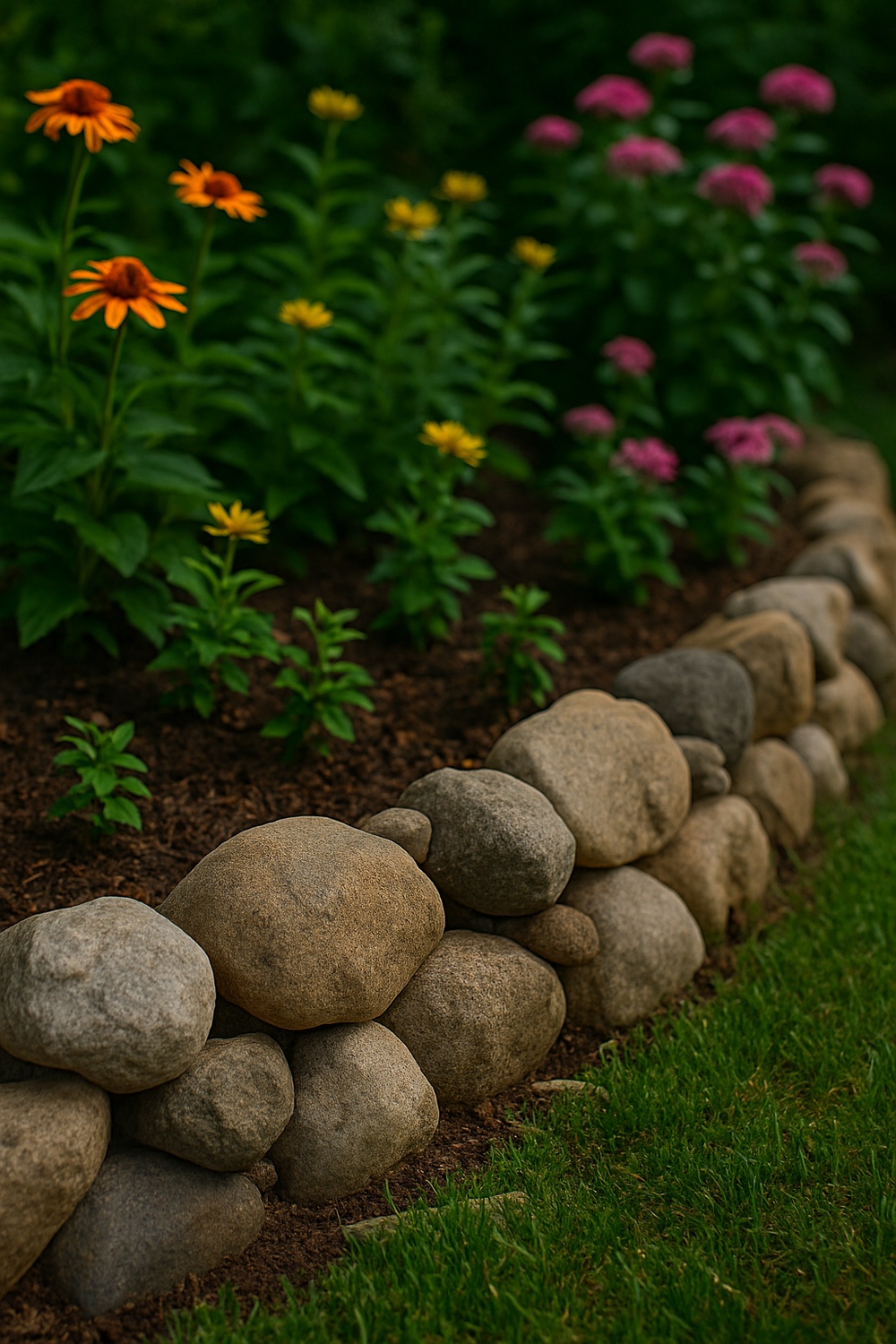
Natural stones make a durable and visually appealing garden edging. You can use fieldstones, river rocks, or cut stones to create a strong barrier that holds soil and mulch in place. This edging type adds texture and works well in both formal and informal gardens. Arrange stones tightly or loosely, depending on your style preference. It’s great for sloped beds too.
Supplies
- Stones (flat or rounded)
- Shovel
- Gloves
- Landscape fabric (optional)
- Wheelbarrow
4. Metal Strip Edging

Metal strip edging provides a sleek, modern line to separate garden beds from the lawn. Aluminum or steel strips are flexible and can be curved or kept straight, perfect for minimalist gardens. They’re resistant to rot, insects, and harsh weather. This edging style nearly disappears visually, highlighting the plants rather than the barrier. It’s a durable, low-profile choice for tidy garden lines.
Supplies
- Metal edging strips
- Edging stakes
- Mallet
- Measuring tape
- Garden spade
5. Terracotta Pot Edging

Turn broken or whole terracotta pots into charming garden edging. Sink half-buried pots into the soil with the open side facing forward, creating a scalloped edge. This playful and decorative option adds warmth and a handmade feel. Use old or chipped pots to keep it budget-friendly. It’s ideal for herb gardens, small beds, or pathways with personality.
Supplies
- Terracotta pots (whole or broken)
- Shovel
- Gardening gloves
- Sand or soil for setting
6. Recycled Bottle Edging

Repurpose glass or plastic bottles by turning them upside down and sinking them into the soil for a unique garden edging. Clear, green, or brown bottles can create colorful borders, especially when the sun hits them. This upcycled idea is eco-friendly and adds character. Use uniform bottle types for a clean look or mix colors and shapes for a quirky garden vibe.
Supplies
- Empty bottles (glass or plastic)
- Shovel
- Rubber mallet
- Measuring tape
7. Cinder Block Edging
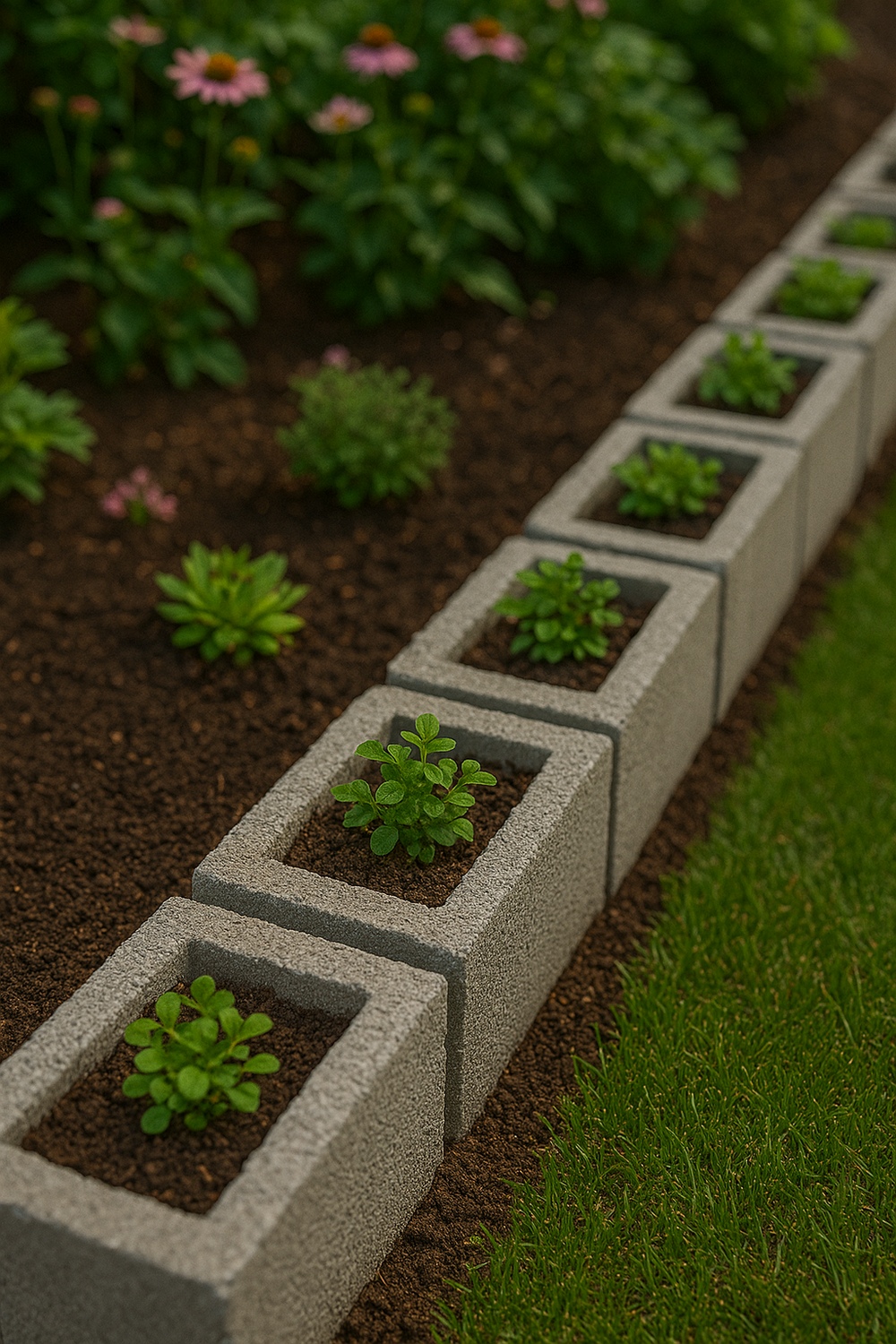
Cinder blocks offer a bold, industrial edging option with bonus planting space. Lay them end to end, holes facing up, to create planters along the edge of your garden bed. Fill with soil and plant succulents, herbs, or flowers. This dual-purpose edging adds structure and greenery at once. It’s budget-friendly and great for modern or urban gardens.
Supplies
- Cinder blocks
- Soil or gravel
- Small plants or succulents
- Shovel
8. Rope and Stake Edging

For a quick and whimsical solution, try rope and wooden stakes as edging. Simply pound stakes into the ground and thread rope or twine through them to define your garden beds. This flexible method is great for cottage gardens or temporary layouts and adds a nautical or rustic touch depending on the rope used.
Supplies
- Wooden stakes
- Thick rope or garden twine
- Hammer or mallet
- Scissors
9. Tile or Mosaic Edging

Use colorful tiles or handmade mosaic pieces to edge your garden with creativity and color. You can embed tiles vertically into the ground or create mosaic-topped concrete borders. This artistic edging is perfect for gardeners who love DIY flair. Reuse chipped dishes or tiles to save money and create something truly one-of-a-kind.
Supplies
- Ceramic tiles or mosaics
- Tile adhesive or concrete (if needed)
- Trowel
- Shovel
10. Living Edging with Plants

Plant low-growing plants like lavender, thyme, or boxwood along the edges of your garden beds to create a soft, living border. This method adds fragrance, texture, and helps define spaces naturally. Choose plants that won’t overgrow and need little trimming. It’s a beautiful and sustainable choice that blends seamlessly into the garden.
Supplies
- Low-growing plants or shrubs
- Gardening gloves
- Trowel
- Watering can